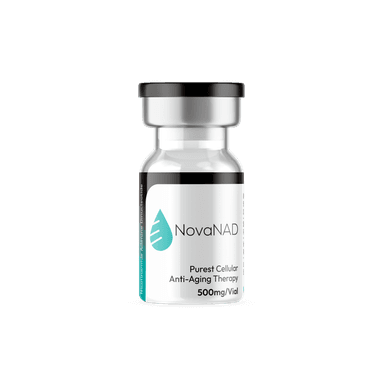
Why NAD+ Delivery Method Matters
NAD+ (nicotinamide adenine dinucleotide) is a large, hydrophilic molecule with a molecular weight of 663.4 g/mol. Its size and charge characteristics create significant challenges for biological delivery — it cannot freely cross cell membranes and is rapidly degraded by ectoenzymes (CD38, CD157) in the extracellular space.
This means the route of administration profoundly affects how much NAD+ actually reaches target tissues. A 500 mg oral dose and a 500 mg IV dose produce vastly different biological outcomes. Understanding these differences is critical for researchers designing NAD+ studies.
The three primary delivery methods — intravenous (IV), subcutaneous (SC), and oral — each have distinct pharmacokinetic profiles, practical considerations, and research applications.
Intravenous (IV) NAD+ Infusion
IV delivery provides direct access to the bloodstream, bypassing all absorption barriers.
Pharmacokinetics: - 100% systemic bioavailability (by definition) - Peak plasma NAD+ levels within minutes of infusion start - Rapid distribution to tissues over 30-60 minutes post-infusion - Clearance half-life: approximately 30-45 minutes for free NAD+ - Tissue uptake and incorporation into the NAD+ metabolome over subsequent hours
Typical Research Protocols: - Dose range: 250-1000 mg per infusion - Infusion duration: 2-4 hours (slow infusion reduces side effects) - Frequency: 1-3 times per week, or daily during intensive protocols - Setting: Clinical or research facility with trained personnel
Advantages: - Highest peak plasma NAD+ levels - Complete dose delivery (no absorption losses) - Immediate onset of effect - Well-established in clinical research settings
Limitations: - Requires clinical setting and trained personnel - Significant time commitment (2-4 hours per session) - Highest cost per dose (facility, personnel, supplies) - Can cause chest pressure, nausea, and flushing during infusion - Not practical for daily sustained protocols - Produces high peak/low trough pharmacokinetic profile
Subcutaneous (SC) NAD+ Injection
Subcutaneous delivery places NAD+ into the fatty tissue beneath the skin, from which it is absorbed into the bloodstream via capillary and lymphatic uptake.
Pharmacokinetics: - Estimated 80-95% bioavailability (minimal first-pass losses) - Peak plasma levels in 30-90 minutes post-injection - More gradual absorption curve compared to IV - Extended tissue exposure compared to IV bolus - Smoother plasma concentration profile with less peak-trough variation
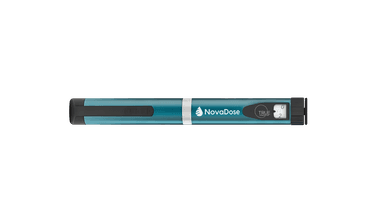
Typical Research Protocols: - Dose range: variable (pen-system dependent) - Administration: Self-injectable via pen device (abdomen or thigh) - Frequency: Daily (standard or microdosing protocols) - Setting: Any location — no clinical setting required
Advantages: - Near-complete bioavailability - Self-administrable (no clinical personnel needed) - Daily dosing maintains steady-state NAD+ levels - Practical for long-term research protocols - Significantly lower cost per dose than IV - ORYN pen systems eliminate preparation complexity
Limitations: - Lower peak levels than IV (but more sustained) - Injection site rotation recommended for daily use - Small injection volume limits maximum single dose
ORYN SC Options: - NAD+ Pen (€189): Fixed daily dose, 30-day supply - NovaDose NAD+ (€299): Adjustable daily microdosing with reusable pen
Oral NAD+ Supplementation
Oral delivery is the most convenient route but faces the greatest bioavailability challenges for NAD+ specifically.
Pharmacokinetics: - Very low oral bioavailability for intact NAD+ (estimated <5%) - NAD+ is degraded by gut ectoenzymes (CD38, CD73) and gastric acid - Hepatic first-pass metabolism further reduces systemic availability - Most oral NAD+ is broken down to nicotinamide (NAM) before absorption - Effective oral NAD+ repletion relies on precursors (NMN, NR, niacin) rather than direct NAD+
Oral Precursor Options: - NMN (Nicotinamide Mononucleotide): Better oral stability; converted to NAD+ via NMNAT enzymes. Bioavailability estimated at 20-30% - NR (Nicotinamide Riboside): Absorbed intact; converted to NMN then NAD+. Similar bioavailability to NMN - Niacin / Nicotinamide (Vitamin B3): Cheapest option; feeds salvage and Preiss-Handler pathways but causes flushing (niacin) and is rate-limited
Advantages: - Most convenient (capsule or powder) - Lowest cost per serving - No needles or injection equipment - Widely available as supplements (precursor forms)
Limitations: - Very low bioavailability for direct NAD+ - Precursors require multi-step enzymatic conversion - Conversion efficiency varies between individuals and tissues - GI side effects at higher doses (niacin flush, GI upset) - Difficult to achieve rapid or significant NAD+ level changes - Limited control over tissue-specific NAD+ repletion
Head-to-Head Comparison
Bioavailability Ranking: 1. IV infusion: ~100% 2. Subcutaneous injection: ~80-95% 3. Oral (precursors): ~20-30% (NMN/NR); <5% (direct NAD+)
Practicality Ranking: 1. Oral: Most convenient, no training required 2. Subcutaneous: Self-injectable, daily home use 3. IV: Requires clinical setting and trained personnel
Cost Per Effective NAD+ Dose: 1. Subcutaneous (pen): Best value for bioavailable NAD+ 2. IV: Highest total cost (effective per mg, but expensive setup) 3. Oral: Cheapest per serving but most NAD+ is lost to degradation
Steady-State NAD+ Maintenance: 1. Subcutaneous (daily): Best sustained levels with minimal variation 2. Oral (daily precursors): Moderate, limited by conversion rate 3. IV (intermittent): Poorest — high peaks followed by complete trough
Best For Research: - Acute NAD+ loading studies: IV infusion - Sustained NAD+ repletion protocols: Subcutaneous daily (NAD+ Pen or NovaDose) - Population-scale or survey studies: Oral precursors (practical, low burden) - Dose-response characterisation: NovaDose (adjustable SC dosing)
For researchers requiring both delivery systems, the Peak Performance campaign's NAD+ Complete Stack bundles the NAD+ Pen and NovaDose NAD+ at 12% off.
Choosing the Right NAD+ Delivery for Your Research
The optimal delivery method depends on your research objectives, timeline, and practical constraints:
Choose IV if: - You need maximum acute NAD+ elevation - Your study design requires clinical-grade dosing control - You have access to infusion facilities and trained personnel - Acute pharmacokinetic characterisation is the goal
Choose subcutaneous (ORYN pen) if: - Sustained daily NAD+ levels are the priority - Your protocol runs for weeks or months - Self-administration is needed (field research, at-home protocols) - Cost-effectiveness is important - You need precise, repeatable dosing without clinical overhead
Choose oral (precursors) if: - Convenience and compliance are paramount - Your study is observational or epidemiological - Budget is severely constrained - Direct NAD+ level control is not critical
ORYN's subcutaneous pen systems occupy the practical sweet spot — near-IV bioavailability with oral-level convenience. The NAD+ Pen (€189) suits fixed-dose protocols, while NovaDose NAD+ (€299) enables adjustable microdosing for dose-response work.
All ORYN products are sold for research purposes only.