A comprehensive summary of BPC-157 dosing information from published clinical trials and preclinical research. Covering dose ranges, routes of administration, protocol durations, and key findings from the scientific literature for research reference.
11 min read · Updated 2026-04-10
BPC-157: Background and Research Context
BPC-157 (Body Protection Compound-157) is a synthetic pentadecapeptide (15 amino acids) derived from a partial sequence of human gastric juice protein. First characterised by researchers at the University of Zagreb in the early 1990s, BPC-157 has since been the subject of more than 100 published preclinical studies investigating its effects on tissue repair, angiogenesis, cytoprotection, and modulation of various biological pathways.
The sequence of BPC-157 is Gly-Glu-Pro-Pro-Pro-Gly-Lys-Pro-Ala-Asp-Asp-Ala-Gly-Leu-Val, with a molecular weight of approximately 1,419 Da. It is typically used in research as the acetate salt or sodium salt form.
Unlike many synthetic peptides, BPC-157 is notable for its reported stability in gastric conditions, which has led to research investigating both oral and parenteral routes of administration. This dual-route potential is unusual among peptides and has contributed to the breadth of published research.
As of 2026, BPC-157 has progressed to early clinical trials for specific indications, though the majority of published data remains preclinical (animal models and in vitro studies). This guide summarises the dosing information from the available published literature to serve as a reference for researchers designing new protocols.
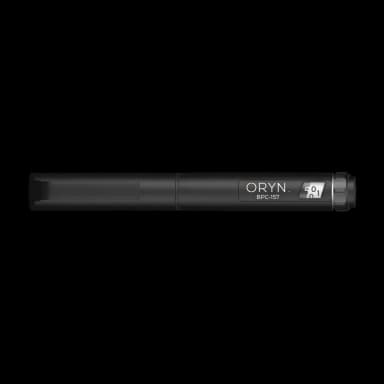
All information is provided for research reference only. BPC-157 is not approved as a medicine in any jurisdiction. ORYN offers BPC-157 as a pre-filled peptide pen for research applications.
Preclinical Dosing: Animal Model Data
The vast majority of BPC-157 research has been conducted in animal models, primarily rats and mice. Published dosing protocols vary, but consistent patterns emerge across the literature.
Standard Preclinical Doses (Rat Models): - Low dose: 10 mcg/kg body weight - Standard dose: 10-50 mcg/kg body weight (most commonly used) - High dose: 100-500 mcg/kg body weight - Ultra-high dose: up to 10 mg/kg (used in toxicity studies -- no adverse effects reported even at these extreme doses)
Key Dosing Studies: - Sikiric et al. (1999): 10 mcg/kg and 10 ng/kg IP (intraperitoneal) in rat gastric ulcer models -- both doses showed significant effects, suggesting a wide effective dose range - Cerovecki et al. (2010): 10 mcg/kg IM (intramuscular) daily for 14 days in a rat tendon healing model - Staresinic et al. (2003): 10 mcg/kg and 10 ng/kg IP daily in a rat colon anastomosis model - Sebecic et al. (1999): 10 mcg/kg IP daily for 14 days in a rat bone fracture model - Chang et al. (2011): 10 mcg/kg SC daily for corneal injury research
Notable Observations: - BPC-157 appears to show effects across a remarkably wide dose range (nanogram to microgram per kg) - No dose-dependent toxicity has been reported in any published study, even at doses hundreds of times above the effective range - The most commonly used protocol is 10 mcg/kg/day administered for 14-28 days - Both acute (single dose) and chronic (multi-week) protocols have been published
Allometric Scaling Note: Direct translation of animal doses to human-equivalent doses requires careful allometric scaling. The standard FDA guidance (Reagan-Shaw et al., 2008) uses a conversion factor based on body surface area rather than simple weight-based scaling. Researchers should apply appropriate scaling methods when designing protocols.
FEATURED PRODUCT
BPC-157 — Regeneration Research Peptide
10 mg · >99% purity · GMP
Routes of Administration in Published Research
BPC-157 has been investigated via multiple routes of administration, which is unusual for a peptide compound. Each route has distinct pharmacokinetic implications.
Intraperitoneal (IP) Injection: The most common route in published preclinical studies. IP injection delivers BPC-157 to the peritoneal cavity, where it is rapidly absorbed into the portal and systemic circulation. Most dose-response studies have used this route. IP is practical for rodent research but not applicable to human research protocols.
Subcutaneous (SC) Injection: Increasingly used in newer publications. SC injection creates a local depot from which BPC-157 is absorbed gradually. This route is relevant to human research applications and is the delivery method used by ORYN's pre-filled peptide pens. Published SC studies typically use the same dose ranges as IP studies (10-50 mcg/kg).
Intramuscular (IM) Injection: Used in studies specifically investigating muscle and tendon healing. IM injection delivers BPC-157 directly to the tissue of interest, potentially achieving higher local concentrations. Cerovecki et al. (2010) used IM injection in their Achilles tendon healing study.
Oral (PO) Administration: One of BPC-157's most distinctive properties is its reported stability in gastric conditions, allowing oral dosing. Several studies have demonstrated efficacy with oral administration: - Sikiric et al. demonstrated oral BPC-157 efficacy in gastric ulcer models - Oral doses are typically higher than parenteral doses (due to first-pass metabolism and variable absorption) - Published oral doses range from 10 mcg/kg to 10 mg/kg in drinking water
Topical Application: A smaller body of research has investigated topical BPC-157 application for wound healing and dermal research. Topical studies typically use cream or gel formulations at concentrations of 1-10 mcg/cm2.
Local vs Systemic Effects: Multiple studies have demonstrated that BPC-157 shows both local and systemic effects regardless of administration route. This suggests that BPC-157 may exert its effects through systemic signalling pathways rather than purely local mechanisms, though the exact mechanism remains under investigation.
Human-Equivalent Dose Calculations
While BPC-157 clinical trials in humans are limited, researchers can estimate human-equivalent doses (HED) from the extensive preclinical data using established allometric scaling methods.
FDA Allometric Scaling (Reagan-Shaw et al., 2008): The standard conversion from rat to human doses uses body surface area normalisation: - HED (mg/kg) = Animal dose (mg/kg) x (Animal Km / Human Km) - For rat to human: Km ratio = 6.2 / 37 = 0.162 - A rat dose of 10 mcg/kg translates to approximately 1.6 mcg/kg HED - For a 70 kg human: approximately 112 mcg (0.112 mg) per dose
Commonly Referenced Human-Equivalent Ranges: - Conservative (from low preclinical doses): 100-200 mcg/day - Standard (from typical preclinical doses): 200-500 mcg/day - High (from higher preclinical doses): 500-1,000 mcg/day
Considerations for Protocol Design: - Allometric scaling provides estimates only -- actual human pharmacokinetics may differ - Bioavailability varies by route: SC injection provides more predictable absorption than oral - No human dose-finding studies have been published as of early 2026 - Researchers should start protocols at the lower end of estimated ranges - Duration in preclinical studies is typically 14-28 days; longer human protocols require careful justification
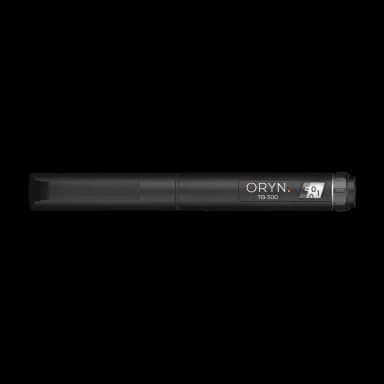
BPC-157 + TB-500 Combination: Several research groups have investigated combining BPC-157 with TB-500 (thymosin beta-4 fragment), hypothesising complementary mechanisms. Published protocols typically use standard doses of each compound administered at the same time. ORYN offers both BPC-157 and TB-500 as individual pre-filled pens for researchers interested in combination protocols.
All dose calculations are provided for research reference only. ORYN does not recommend specific doses for any purpose. Researchers should consult the primary literature and their institutional review processes when designing protocols.
Clinical Trial Status: What We Know in 2026
As of April 2026, the clinical trial landscape for BPC-157 is still in its early stages, but several developments are noteworthy.
Registered Clinical Trials: - ClinicalTrials.gov lists a small number of registered trials investigating BPC-157 or BPC-157-related compounds - The University of Zagreb group (originators of BPC-157 research) has been involved in early-phase clinical work - Indications under investigation include gastrointestinal conditions, where BPC-157's gastric origin provides a rational basis
Key Challenges for Clinical Translation: - Peptide stability and formulation for human use require extensive pharmaceutical development - Regulatory pathways for novel peptide drugs are lengthy and expensive - The broad mechanism of action reported in preclinical studies makes it difficult to select a single primary endpoint for clinical trials - Intellectual property challenges: BPC-157 is well-characterised in the public domain, reducing commercial incentive for pharmaceutical company investment
Emerging Data: - Several groups have published case series and observational data from clinical settings, though these do not constitute formal clinical trials - The research community continues to generate preclinical data at a high rate, with new publications appearing monthly - Combination studies (BPC-157 + other peptides) are an active area of investigation
What This Means for Researchers: The limited clinical trial data means that researchers working with BPC-157 are largely relying on preclinical evidence for protocol design. This is not unusual for novel peptide compounds, and the extensive preclinical database provides a solid foundation for protocol development.
Researchers should monitor ClinicalTrials.gov and PubMed for new publications. As clinical data emerges, it will refine the dose ranges and administration protocols currently estimated from animal studies.
ORYN's BPC-157 peptide pen provides a convenient, precisely dosed format for researchers. >99% purity, GMP certified, COA included with every order. Ships from the EU with next-day UK delivery.
Designing a BPC-157 Research Protocol: Practical Guide
Based on the published literature, here is a framework for researchers designing BPC-157 protocols. This is not medical advice -- it is a synthesis of published methodology for research reference.
Protocol Elements to Define: 1. Research question and primary endpoint 2. Dose selection (based on allometric scaling from preclinical data) 3. Route of administration (SC injection is most practical for pen-based delivery) 4. Dosing frequency (typically once daily in published protocols) 5. Protocol duration (14-28 days in most preclinical studies; justify longer durations) 6. Outcome measures and measurement timepoints 7. Storage and handling procedures
Recommended Protocol Structure: - Baseline measurements before first dose - Consistent daily dosing at the same time each day - Regular interim measurements (e.g., weekly) - Final measurements at protocol completion - Optional follow-up measurements post-protocol
Quality Control Measures: - Use only research-grade BPC-157 with verified COA (HPLC purity >98%, ideally >99%) - Maintain consistent storage conditions (2-8 degrees Celsius for pen format) - Record exact dosing times and any deviations - Use the same product lot throughout a protocol when possible - Document any observed effects or adverse reactions
Pen vs Vial for BPC-157 Research: ORYN's BPC-157 pre-filled pen eliminates the reconstitution step that introduces variability into vial-based protocols. The factory-calibrated dosing mechanism provides less than 2% variance between doses, compared to 10-15% variance typical of manual syringe preparation. For multi-week protocols where consistency is paramount, the pen format is superior.
Combination with TB-500: Researchers interested in the BPC-157 + TB-500 combination should administer both at the same time of day. Both are available from ORYN as separate pre-filled pens. The published rationale for this combination is based on complementary mechanisms: BPC-157 acting primarily through angiogenesis and NO system modulation, and TB-500 through actin sequestration and cell migration pathways.
All products are sold for research purposes only. Visit orynxpeptides.com for specifications and ordering.