An in-depth comparison of CJC-1295 (with and without DAC) and recombinant human growth hormone for research applications. Examining mechanisms of action, cost per IU equivalent, published efficacy data, safety profiles, and practical considerations for protocol design.
10 min read · Updated 2026-04-10
Mechanism of Action: Stimulation vs Replacement
The fundamental difference between CJC-1295 and recombinant human growth hormone (rHGH) lies in their mechanism of action. Understanding this distinction is critical for researchers designing protocols and interpreting results.
Recombinant HGH (somatropin): rHGH is a 191-amino acid protein identical to endogenous human growth hormone. When administered, it directly replaces or supplements the body's own GH production. This means rHGH bypasses the hypothalamic-pituitary axis entirely -- it does not stimulate natural GH release but rather adds exogenous GH directly into circulation. The pharmacokinetic profile shows a rapid peak followed by clearance with a half-life of approximately 2-3 hours.
CJC-1295 (Growth Hormone Releasing Hormone analogue): CJC-1295 is a synthetic analogue of GHRH (growth hormone releasing hormone) consisting of 29 amino acids. It works by binding to GHRH receptors on the anterior pituitary gland, stimulating the natural release of growth hormone. There are two variants: - CJC-1295 without DAC (also called Modified GRF 1-29): shorter half-life (approximately 30 minutes), produces a pulsatile GH release pattern - CJC-1295 with DAC (Drug Affinity Complex): extended half-life of 6-8 days due to albumin binding, produces sustained GH elevation
The stimulatory mechanism of CJC-1295 means it works with the body's existing feedback systems. When GH levels rise sufficiently, somatostatin provides negative feedback, preventing excessive elevation. This built-in regulatory mechanism is absent with direct rHGH administration.
For researchers studying growth hormone physiology, the choice between stimulation (CJC-1295) and replacement (rHGH) affects not only GH levels but also the pulsatility pattern, IGF-1 response, and downstream signalling cascades.
Cost Analysis: CJC-1295 vs rHGH
Cost is one of the most significant differentiators between CJC-1295 and rHGH, particularly for multi-week research protocols.
Recombinant HGH Pricing: - Pharmaceutical-grade rHGH (Genotropin, Norditropin, Humatrope): EUR 500-1,500 per 36 IU pen, depending on brand and market - Generic/biosimilar rHGH: EUR 200-500 per equivalent quantity - Research-grade rHGH from peptide suppliers: EUR 150-400 per 100 IU kit - Typical research protocol (2-4 IU daily for 12 weeks): 168-336 IU total = EUR 700-3,000+ depending on source - Additional consumables: syringes, needles, bacteriostatic water for vial formats
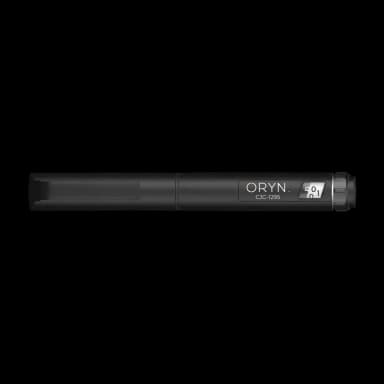
CJC-1295 Pricing: - Research-grade CJC-1295 (without DAC): substantially lower cost per effective dose - ORYN CJC-1295 pen: pre-filled, factory-calibrated, with a full protocol supply in a single pen - Typical research protocol (100-300mcg daily or 2-3x weekly for 12 weeks): total cost is a fraction of equivalent rHGH protocols - No reconstitution supplies needed with pen format
Cost per Equivalent GH Output: Direct cost comparison is complicated by the different mechanisms. CJC-1295 stimulates endogenous GH release, so the "equivalent" depends on individual pituitary responsiveness. Published research suggests that CJC-1295 at standard research doses can increase GH output by 200-1,000% above baseline, producing a physiological range of GH elevation.
When researchers estimate cost per IU-equivalent of GH output, CJC-1295 typically delivers 5-15x better value than pharmaceutical rHGH. Even compared to research-grade rHGH, CJC-1295 remains substantially more cost-effective, particularly when using ORYN's pre-filled pen format that eliminates consumable costs and wastage.
For research teams with limited budgets, this cost differential often makes CJC-1295 the only viable option for extended GH-axis research protocols.
FEATURED PRODUCT
CJC-1295 — GH Secretagogue Research Peptide
5 mg · >99% purity · GMP
Efficacy Data: Published Research Compared
Both CJC-1295 and rHGH have substantial bodies of published research, though the depth and quality of evidence differ.
rHGH Research Base: Recombinant HGH has been studied extensively since its FDA approval in 1985. Thousands of published studies document its effects on: - Linear growth in GH-deficient subjects - Body composition (lean mass increase, fat mass decrease) - Bone mineral density - IGF-1 axis stimulation - Metabolic parameters (glucose metabolism, lipid profiles)
The rHGH literature provides clear dose-response relationships, well-characterised side effect profiles, and long-term safety data spanning decades. However, much of this research was conducted in GH-deficient populations, and results may not directly translate to GH-sufficient research models.
CJC-1295 Research Base: CJC-1295 research is more recent but growing rapidly: - Teichman et al. (2006) demonstrated that CJC-1295 with DAC produced sustained GH elevation for 6-14 days following a single injection, with IGF-1 increases of 1.5-3x above baseline - Alba et al. (2006) confirmed dose-dependent GH and IGF-1 increases with CJC-1295 DAC in healthy subjects - Multiple studies have shown that CJC-1295 combined with a GHRP (such as ipamorelin) produces synergistic GH release exceeding either compound alone - Research published in 2024-2025 has investigated CJC-1295 effects on sleep architecture, body composition, and recovery markers
Key Difference in Efficacy Profile: rHGH produces a flat, sustained GH elevation that does not mimic natural pulsatile secretion. CJC-1295 (particularly without DAC) preserves the pulsatile pattern, which research suggests is important for optimal receptor signalling. For researchers studying GH physiology rather than simply elevating GH levels, CJC-1295 may provide more physiologically relevant data.
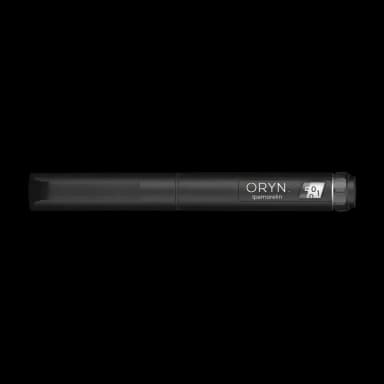
ORYN also offers ipamorelin pens, which pair synergistically with CJC-1295 for researchers interested in maximising GH axis stimulation through complementary GHRH + GHRP pathways.
Safety Profiles: What the Research Shows
Safety considerations are paramount in research protocol design. The safety profiles of CJC-1295 and rHGH differ in important ways.
rHGH Safety Concerns: - Carpal tunnel syndrome: reported in multiple studies at higher doses - Joint pain and oedema: common dose-dependent side effects - Insulin resistance: rHGH is known to impair glucose tolerance, particularly with chronic administration - Potential interaction with cancer biology: sustained supraphysiological GH/IGF-1 levels have raised theoretical concerns in the oncology literature - Gynecomastia: reported in some male subjects - Hypothyroidism: GH can increase T4-to-T3 conversion, potentially masking or inducing thyroid dysfunction - Acromegalic features: chronic supraphysiological GH can cause irreversible skeletal changes
CJC-1295 Safety Profile: - Generally well-tolerated in published research at standard doses - Injection site reactions (transient redness, swelling): most commonly reported side effect - Flushing and warmth: reported by some subjects, typically resolving within 30 minutes - Headache: occasional, mild, and self-limiting - Water retention: less pronounced than rHGH due to preserved negative feedback - The built-in somatostatin feedback mechanism limits the risk of sustained supraphysiological GH elevation - No reports of carpal tunnel syndrome or significant joint effects at research doses in published literature
Critical Safety Advantage of CJC-1295: Because CJC-1295 works through the body's natural regulatory axis, the risk of sustained supraphysiological GH elevation is inherently lower than with direct rHGH administration. When GH rises above the physiological set point, somatostatin release increases, dampening further GH secretion. This negative feedback loop is completely bypassed by exogenous rHGH.
For researchers, this means CJC-1295 protocols carry a fundamentally different risk profile than rHGH protocols, particularly in longer-term studies. All compounds are for research purposes only -- researchers should design protocols in accordance with their institutional safety guidelines.
Combination Protocols: CJC-1295 + Ipamorelin
One of the most significant advantages of CJC-1295 over rHGH is the ability to combine it with complementary peptides for synergistic effects. The CJC-1295 + ipamorelin combination has become one of the most widely studied peptide stacks in GH-axis research.
Synergy Mechanism: CJC-1295 (a GHRH analogue) and ipamorelin (a ghrelin receptor agonist/GHRP) stimulate GH release through different receptor pathways: - CJC-1295 activates GHRH receptors on somatotroph cells, increasing both the amplitude and duration of GH pulses - Ipamorelin activates GHS-R1a (ghrelin receptors), triggering GH release through a separate intracellular signalling cascade - When both pathways are activated simultaneously, the resulting GH release is greater than the sum of either compound alone (true synergy, not merely additive)
Published research has demonstrated that the GHRH + GHRP combination can produce GH output equivalent to moderate rHGH doses while maintaining pulsatile secretion patterns and physiological feedback regulation.
Practical Protocol Design: - CJC-1295 without DAC + Ipamorelin: administered together 1-3 times daily, typically pre-sleep and/or pre-training in exercise research models - CJC-1295 with DAC + Ipamorelin: DAC variant administered 1-2x weekly for sustained baseline elevation, with ipamorelin added for acute pulse amplification - Both formats maintain the safety advantage of preserved negative feedback
Cost Advantage Over rHGH: The CJC-1295 + ipamorelin combination, even purchased as two separate compounds, typically costs less than equivalent rHGH protocols while providing a more physiological GH elevation pattern.
ORYN offers both CJC-1295 and ipamorelin as individual pre-filled peptide pens, making it straightforward for researchers to implement combination protocols with factory-calibrated dosing precision. Both pens ship from the EU with next-day UK delivery. All products are for research purposes only.
Making the Right Choice for Your Research
The decision between CJC-1295 and rHGH should be driven by the specific research question, budget, and protocol requirements.
Choose rHGH When: - Studying the direct effects of GH itself (rather than GH-axis stimulation) - Working with GH-deficient models where endogenous GH production is compromised - Requiring precise, known GH doses (rHGH provides exact IU delivery) - Budget is not a constraint and you need pharmaceutical-grade documentation - Replicating existing published protocols that used rHGH specifically
Choose CJC-1295 When: - Studying GH-axis physiology with preserved pulsatile secretion - Budget is a consideration (5-15x cost advantage) - Running long-term protocols (12+ weeks) where cost accumulates - Interested in combination approaches with GHRP compounds - Prioritising a safety profile with intact negative feedback regulation - Studying natural GH dynamics rather than exogenous replacement effects
Choose CJC-1295 + Ipamorelin When: - Seeking maximal GH-axis stimulation through synergistic pathways - Want to replicate the most widely used peptide combination protocol in current research - Need flexible dosing (adjust each compound independently) - Studying both GHRH and GHRP pathways simultaneously
ORYN Product Options: - CJC-1295 Peptide Pen: Pre-filled, >99% purity, GMP certified, COA included - Ipamorelin Peptide Pen: Pre-filled, >99% purity, ideal for combination protocols - Both available with next-day UK delivery and 3-5 day EU delivery
For most researchers entering the GH-axis field, CJC-1295 (alone or combined with ipamorelin) offers the best balance of efficacy, cost, safety, and physiological relevance. rHGH remains the gold standard for direct GH replacement research but at a significantly higher cost.
All ORYN products are sold for research purposes only. Visit orynxpeptides.com for specifications, pricing, and COA documentation.