A complete guide to growth hormone peptides for research purposes. Understanding CJC-1295, ipamorelin, the GHRH and GHS receptor pathways, and how these compounds are used in modern GH axis research.
10 min read · Updated 2026-04-10
The Growth Hormone Axis Explained
The growth hormone (GH) axis is one of the most important endocrine systems in the body, regulating growth, metabolism, body composition, and tissue repair. Understanding this axis is essential for researchers working with GH-releasing peptides.
Key components of the GH axis: - Hypothalamus: Produces growth hormone-releasing hormone (GHRH) and somatostatin (growth hormone-inhibiting hormone) - Anterior pituitary: Contains somatotroph cells that produce and secrete growth hormone in response to GHRH stimulation - Liver and peripheral tissues: Convert GH to insulin-like growth factor 1 (IGF-1), which mediates many of GH's biological effects - Feedback loops: IGF-1 and GH feed back to the hypothalamus and pituitary to regulate secretion
Two receptor pathways for GH release: 1. GHRH receptor (GHRH-R): Stimulated by GHRH and analogues like CJC-1295 2. Growth hormone secretagogue receptor (GHS-R1a/ghrelin receptor): Stimulated by ghrelin and synthetic secretagogues like ipamorelin
These two pathways converge on the somatotroph cell but through different intracellular signalling cascades, which is why combining compounds that target each pathway can produce enhanced GH release.
All ORYN products are for research purposes only.
CJC-1295: The GHRH Analogue
CJC-1295 is a synthetic analogue of growth hormone-releasing hormone (GHRH) with modifications designed to extend its biological half-life from minutes to days.
Structure and pharmacology: - 29-amino acid peptide based on the GHRH(1-29) sequence - Modified with a Drug Affinity Complex (DAC) that enables covalent binding to serum albumin - This albumin binding extends the half-life to approximately 8 days (vs. 7-10 minutes for native GHRH) - Stimulates GH release through the GHRH receptor on pituitary somatotrophs
Mechanism of action: CJC-1295 binds to GHRH receptors on pituitary somatotroph cells, activating adenylyl cyclase and increasing intracellular cAMP. This triggers calcium influx and GH vesicle exocytosis. The extended half-life allows sustained GHRH receptor stimulation, promoting elevated baseline GH levels and enhanced pulsatile release.
Published research findings: - Single dose studies showed sustained GH elevation for 6-8 days - IGF-1 levels increased proportionally with GH elevation - GH release maintained pulsatile pattern (physiological), not continuous (non-physiological) - Well-tolerated in published studies with injection site reactions as the most common adverse event
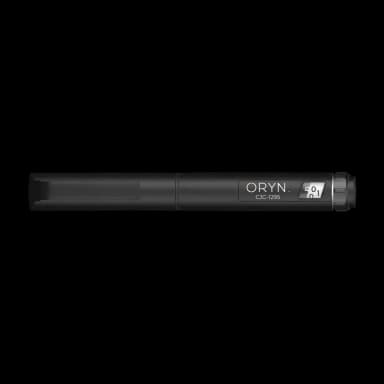
Research applications: CJC-1295 is used to study the GHRH pathway in isolation and in combination with GHS-R1a agonists like ipamorelin. Available from ORYN as a pre-filled peptide pen. >99% purity, GMP manufactured.
FEATURED PRODUCT
CJC-1295 — GH Secretagogue Research Peptide
5 mg · >99% purity · GMP
Ipamorelin: The Selective GH Secretagogue
Ipamorelin is a pentapeptide growth hormone secretagogue that stimulates GH release through the GHS-R1a (ghrelin) receptor. It is notable for its selectivity, stimulating GH release without significantly affecting other hormones.
Structure and selectivity: - Five amino acid peptide (Aib-His-D-2Nal-D-Phe-Lys-NH2) - Highly selective for GHS-R1a receptor - Does not significantly stimulate ACTH, cortisol, or prolactin release at GH-releasing doses - This selectivity distinguishes it from earlier GH secretagogues like GHRP-6 and GHRP-2
Mechanism of action: Ipamorelin binds to GHS-R1a receptors on pituitary somatotroph cells, activating phospholipase C and increasing intracellular calcium through IP3 signalling. This pathway is distinct from the cAMP pathway used by GHRH/CJC-1295, which is why combining the two produces enhanced GH release.
Published research findings: - Dose-dependent GH release demonstrated in multiple animal models - Minimal effects on cortisol and prolactin (unlike GHRP-6) - Maintains the natural pulsatile pattern of GH secretion - Does not desensitise the GH axis with repeated dosing in published studies
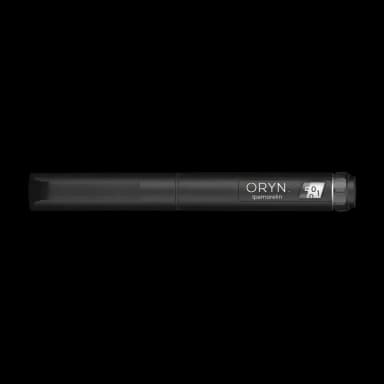
Research applications: Ipamorelin is valuable for studying GHS-R1a-mediated GH release in isolation and in combination with GHRH analogues. Available from ORYN as a pre-filled peptide pen. >99% purity, GMP certified.
CJC-1295 + Ipamorelin: The Combination Protocol
The combination of CJC-1295 and ipamorelin is one of the most widely used GH peptide protocols in research, leveraging the complementary receptor pathways for enhanced GH release.
Why researchers combine them: - CJC-1295 activates the GHRH receptor (cAMP pathway) - Ipamorelin activates the GHS-R1a receptor (IP3/calcium pathway) - Different intracellular signalling cascades converge on GH vesicle exocytosis - Published data suggests the combination produces GH release greater than either compound alone - Both maintain physiological pulsatile GH patterns
Advantages over exogenous GH: - Stimulates endogenous GH production rather than replacing it - Maintains natural feedback regulation - Pulsatile release pattern mimics physiology (continuous exogenous GH does not) - Multiple downstream effects through the intact GH-IGF-1 axis - More relevant for studying GH axis physiology
Considerations for research protocol design: - Timing: GH secretion follows a circadian rhythm, with the largest natural pulse occurring during sleep - Dosing: Both compounds show dose-dependent responses in published studies - Duration: Extended protocols can evaluate adaptation or sustained effects - Endpoints: GH pulsatility, IGF-1 levels, and downstream metabolic markers
Both CJC-1295 and ipamorelin are available from ORYN as individual pre-filled pens with >99% purity and GMP certification. For research purposes only.
Practical Research Considerations
Designing effective GH peptide research protocols requires attention to several practical factors that can significantly impact results.
Quality and purity: GH peptide research is particularly sensitive to compound quality. Impurities can activate off-target receptors or produce confounding effects. ORYN maintains >99% purity for both CJC-1295 and ipamorelin, with HPLC and mass spectrometry verification on every batch COA.
Dosing precision: Pre-filled peptide pens deliver doses with under 2% variance, compared to 10-15% variability with manual reconstitution. This precision is critical for GH research where dose-response relationships are steep.
Storage requirements: - Store peptide pens at 2-8 degrees Celsius - Do not freeze - Protect from light - Use within the expiry period indicated on the product
Comparing GH peptides to direct GH administration: Researchers should note that GH-releasing peptides study the GH axis (stimulating endogenous production) while exogenous GH studies the effects of GH itself. The research questions are different and the two approaches are complementary, not interchangeable.
Ordering from ORYN: - CJC-1295 and ipamorelin available as individual pre-filled pens - >99% purity, GMP manufactured in South Korea - COA included with every order - EU shipping: 3-5 day delivery, next-day UK - Free shipping over EUR175 (GBP130)
All ORYN products are for research purposes only.