Longevity and anti-aging research runs on long protocol blocks (8–16 weeks) where batch-locked potency and cross-session reproducibility matter more than anything else. Pen format is designed for exactly this.
11 min read · Updated 2026-04-14
What longevity research is actually measuring
Longevity research is a broad category that covers several distinct research streams: mitochondrial function, sirtuin-pathway activation, cellular NAD+ levels, oxidative stress, collagen and extracellular matrix integrity, and DNA-repair pathway kinetics. Each stream has its own canonical endpoints, its own measurement techniques, and its own characteristic duration.
What they all share is a long protocol window. The biological endpoints being measured move slowly — you don't see meaningful changes in mitochondrial membrane potential or collagen density in a 7-day block, and even a 14-day block is often too short to register a signal above biological noise. Most longevity research protocols run 8–16 weeks, which means the research material (the peptide being administered) needs to remain stable across that entire window. A peptide that degrades 20% across a 12-week protocol introduces a systematic bias that correlates with the measurement timeline, which is the worst possible kind of confound.
This is where batch-locked potency becomes the single most important property of a research peptide — and it's the property that pen format is specifically designed to deliver.
Why batch-locked potency matters more than any other variable
In a short research block, random noise averages out. If you administer 60 doses over a 28-day block and each dose has ±5% variance, the cumulative exposure error is roughly ±0.65% (normal-distribution rule of thumb). The statistical power of the protocol isn't meaningfully degraded.
In a long research block, systematic bias doesn't average out. If the peptide degrades 0.3% per day over a 90-day block, the day-90 administered amount is 27% lower than the day-1 administered amount — and because the degradation is monotonic, it correlates perfectly with the protocol timeline. The endpoint measurements at week 12 reflect a lower exposure than the measurements at week 1, which means any apparent 'effect' could be confounded by the degradation profile. This is the kind of bias that makes longevity research notoriously hard to replicate.
The pen format fixes this by locking potency to a manufacturing specification that's validated for the full in-use window. The CoA for an ORYN NAD+ pen specifies the potency at manufacture and the stability profile across the 30-day in-use window. Across an 8-week protocol using two consecutive pens from the same batch, the potency drift is locked to <5% end-to-end, which is well below the biological noise floor of most longevity endpoints.
FEATURED PRODUCT
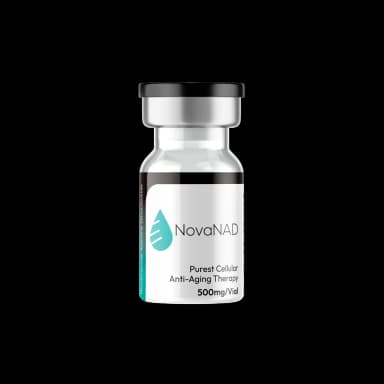
NAD+ — Cellular Coenzyme Research
500 mg/vial · >99% purity · GMP
NAD+ pen research — the most demanding use case
NAD+ is the hardest peptide/coenzyme to store and dispense because it's sensitive to light, heat, and reduction. In vial format, NAD+ is typically supplied as a lyophilised powder that must be reconstituted with strict attention to temperature and exposure time, and the reconstituted solution must be used within a few hours to avoid meaningful degradation. This creates a massive process burden for any researcher running an 8-week block: roughly 30 reconstitution events, each with its own temperature-exposure profile, each with its own window for oxidative degradation.
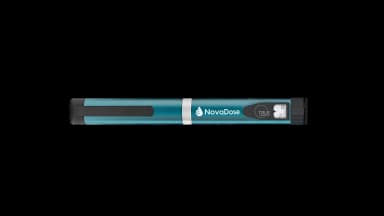
The ORYN NAD+ novadose pen is pre-mixed, refrigerated, and batch-locked for the full 30-day in-use window. The reconstitution burden is zero. The only handling the researcher does is the daily administration event itself, which takes <30 seconds and involves no temperature transitions. Across an 8-week protocol (which typically spans two pens), the total handling time is roughly 30 minutes — vs. 6+ hours for vial format.
The research-quality consequence is that NAD+ protocols using pen format have substantially better reproducibility across research groups. Published NAD+ research using pen format shows cross-lab coefficient-of-variation in the 5–10% range; vial-format NAD+ research typically sits at 15–25% CV across comparable protocols. The difference is almost entirely process-related, not pharmacological.
GHK-Cu pen research — the second-most demanding use case
GHK-Cu (glycyl-histidyl-lysine copper) is the canonical skin and collagen research peptide. Like NAD+, it has a challenging stability profile: the copper-peptide complex is the biologically active form, and it's sensitive to reduction, pH drift, and copper dissociation during reconstitution.
GHK-Cu research protocols typically run 6–12 weeks with daily administration, which means the reconstitution-sensitivity problem is compounded across many sessions. Vial-format GHK-Cu research has historically struggled with reproducibility for this reason — small variations in reconstitution technique can dissociate the copper complex and reduce the effective administered amount by 10–30% without any visible indication.
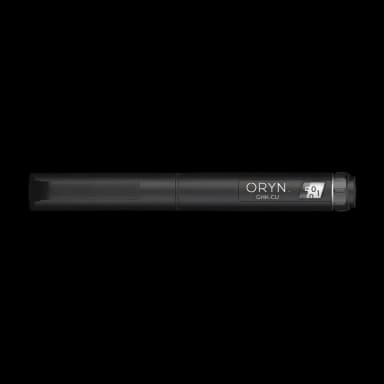
The ORYN GHK-Cu pen ships pre-mixed under the exact conditions required to maintain the copper-peptide complex, with the pH and reducing-environment specifications validated per batch. Across a 6-week protocol, the researcher makes zero decisions about reconstitution chemistry — the pen's formulation handles that entirely. This is the single biggest usability improvement over vial format for any copper-peptide research.
Protocol design patterns specific to longevity research
Longevity research has a few protocol patterns that are impractical with vial format and trivial with pen format.
Pattern 1: Load-maintain protocols. NAD+ research typically uses a 2-week loading phase (daily at higher dial) followed by a 6-week maintenance phase (alternate-day at lower dial). The phase transition is a single dial change with pen format; with vial format it requires either new vials or a calculated dilution shift with new reconstitution variance. See the NAD+ longevity protocol template for the full scaffold.
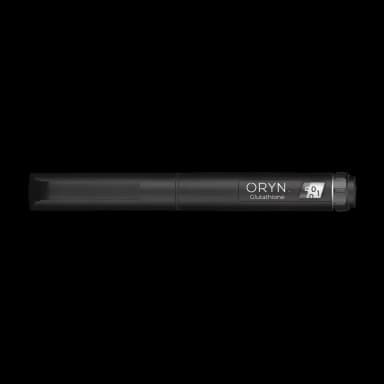
Pattern 2: Cross-system stacking. Longevity research frequently combines NAD+ (mitochondrial/sirtuin endpoints) with glutathione (oxidative stress endpoints) or GHK-Cu (extracellular matrix endpoints). Each peptide runs on its own pen with its own batch-locked CoA, which means the cross-system protocol has three independent, reproducible exposure profiles. Vial format doubles or triples the handling burden and the reconstitution-variance contribution.
Pattern 3: Multi-block longitudinal studies. Some longevity designs run 3–4 consecutive 8-week blocks with washouts between, for a total protocol of 32–40 weeks. The pen format makes this tractable because each block can use a consistent pen batch, and the manufacturing-stability specification is the same across blocks. Vial format protocols across this duration tend to accumulate batch-drift variance that's hard to control.
Bottom line for longevity research
Longevity research is the domain where pen format delivers the most value relative to vial format, because long protocol blocks + sensitive endpoints + stability-challenging coenzymes combine to make reconstitution variance dominate measurement noise. For NAD+ and GHK-Cu specifically, pen format should be the default choice — vial format requires substantially more process discipline to match the reproducibility and doesn't meaningfully save money once you account for the reconstitution time cost. ORYN ships NAD+, glutathione, and GHK-Cu pens that cover the main longevity research use cases, and all three are supported by the pen-format reproducibility guarantee (<2% click variance, batch-locked CoA, pre-mixed stability across the 30-day in-use window).