BPC-157 Pen vs TB-500 Pen
The classic recovery-research pair. Most researchers end up using both.
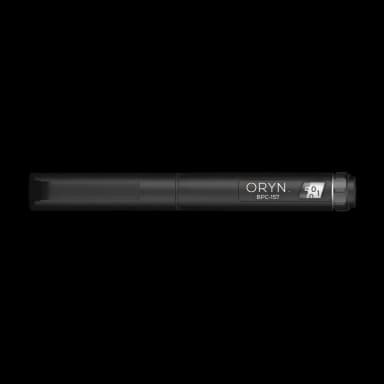
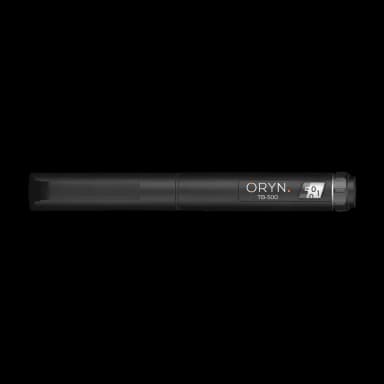
BPC-157 and TB-500 are the two most-researched peptides in the tissue-repair and recovery research space, and they're the most common pair researchers ask about when starting pen-format work. Both ship from ORYN as pre-mixed, dial-a-dose peptide pens with <2% variance per click, >99% HPLC-verified purity, and a Certificate of Analysis. The question is rarely 'which one' — most researchers eventually work with both — but the order and emphasis depends on the specific research focus.
Scientific background
BPC-157 (Body Protection Compound-157) is a pentadecapeptide derived from a protective gastric protein. Research investigates its role in nitric oxide pathway modulation, growth factor expression, angiogenesis, and gastrointestinal mucosal integrity. TB-500 (Thymosin Beta-4 fragment 17-23) is a smaller peptide derived from thymosin beta-4, the most abundant protein in platelets. Research investigates its role in cell migration, actin polymerisation, inflammatory pathway modulation, and structural tissue repair. The two peptides target complementary mechanisms — BPC-157 drives the local tissue-level response, TB-500 drives the systemic cell-migration response — which is why they're often studied together in the published literature.
When to pick which
BEST FOR BPC-157
BPC-157 is the usual starting point for gut research, tendon and ligament investigation, neuroprotective research, and any protocol where the research focus is localised tissue response to injury or stress. The gastric-protective mechanism makes it particularly interesting for gastrointestinal barrier function studies.
BEST FOR TB-500
TB-500 is the usual starting point for systemic recovery research, wound healing investigation, cardiovascular tissue research, and any protocol where cell migration or actin dynamics are the primary pathway of interest. The systemic distribution makes it less localised than BPC-157.
STACKING NOTE
The BPC-157 + TB-500 stack is one of the most well-documented peptide combinations in research literature. Typical protocols run them concurrently over 4–8 weeks, with BPC-157 investigated for local tissue-level response and TB-500 investigated for systemic inflammation modulation. Both peptides are administered subcutaneously, and researchers often note better outcomes when injection sites are rotated near the area of interest.
Full comparison matrix
| CATEGORY | BPC-157 | TB-500 |
|---|---|---|
| Peptide classification | Pentadecapeptide (15 amino acids) | Heptapeptide fragment (7 amino acids) |
| Research area | Tissue repair, gut, tendons, neuroprotection | Cell migration, systemic inflammation, wound healing |
| Cartridge size | 10 mg (30-day supply) | 15 mg (30-day supply) |
| Typical click increment | 0.25 mg per click | 0.5 mg per click |
| Dose accuracy | <2% variance per click | <2% variance per click |
| Research use signature | Local tissue, gastrointestinal | Systemic, cardiovascular |
| Published literature volume | Extensive (most-studied in research recovery) | Substantial (second-most-studied) |
| Pen stability in use | 30 days refrigerated | 30 days refrigerated |
| Starting price | €119 EU · £99 UK · $129 US · R$599 BR | €119 EU · £99 UK · $129 US · R$599 BR |
VERDICT
Both pens score equivalently on pen-format metrics because both are ORYN products — the decision is about research purpose. If you're running a tissue-repair or gut research protocol and only want one peptide, BPC-157 is the usual starting point. If you're running wound healing, cell migration, or systemic inflammation research, TB-500 is the usual choice. For comprehensive recovery research, most labs use both — the literature supports the stack, and the pen format makes running both simultaneously straightforward.
FAQ
Can I use BPC-157 and TB-500 together?
In the research literature, yes — the BPC-157 + TB-500 combination is one of the most-studied peptide stacks in tissue-repair research. The two peptides target complementary mechanisms (local tissue response vs systemic cell migration) so they're investigated together in many protocols. ORYN does not provide dosing guidance for human use.
Which one should I start with?
Depends on the research focus. For gut, tendon, ligament, or neuroprotective research, BPC-157 is the common starting point. For systemic inflammation, wound healing, or cardiovascular research, TB-500 is more common. If the research protocol is comprehensive recovery, researchers typically run both concurrently.
Is one safer than the other?
Both peptides have substantial safety data in animal research literature and are not classified as controlled substances in the UK, EU, US, or Brazil. ORYN sells both strictly for research use only and does not provide therapeutic or dosing guidance for human administration. Any safety conclusions belong to the research supervisor.
Do they last the same time in use?
Yes. Both ORYN pens have a 30-day in-use shelf life when refrigerated at 2–8 °C. The sealed glass cartridge format keeps oxygen out, which is the main driver of peptide degradation. Both products also have a 24-month unopened shelf life from the manufacture date printed on the pen label.
Are they both available in the same regions?
Yes. BPC-157 and TB-500 pens ship worldwide from ORYN's EU dispatch hub — next-day UK, 2–5 day EU, 5–8 day USA, 7–14 day Brazil. Both are legal to purchase for research use in every market ORYN ships to.
Order both and compare in your own lab
Every ORYN pen ships with a Certificate of Analysis, a 30-day money-back guarantee, and the pen-format mechanical accuracy (<2% variance per click) that makes direct comparison possible.