COMPLETE RESEARCH GUIDEPEPTIDE PEN
NAD+
Cellular Coenzyme Research
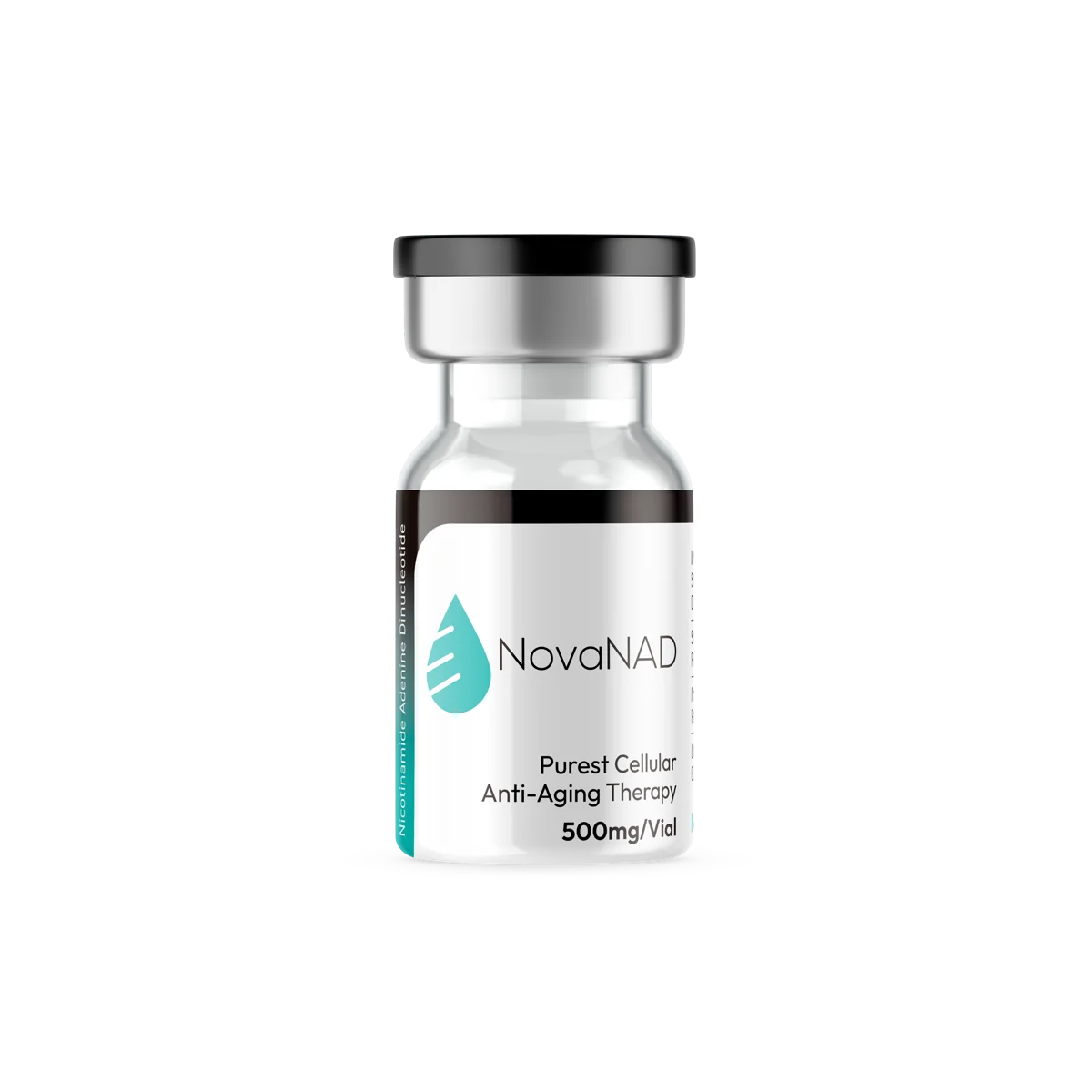
500 mg/vial (Nicotinamide Adenine Dinucleotide)500 mg/vialFROM EUR 189PREMIUM
QUICK ANSWER
NAD+ (cellular coenzyme research) is a pharmaceutical-grade research compound. NovaNAD provides high-purity NAD+ (Nicotinamide Adenine Dinucleotide) with nano-scale particles for enhanced bioavailability. Research suggests NAD+ is a critical coenzyme in mitochondrial metabolism, sirtuin activation, and DNA repair pathways. ORYN delivers NAD+ in a precision-dosed reusable pen starting from EUR 189. All products are for research purposes only.
Science & Research
FULL ENCYCLOPEDIA ENTRY →MOLECULAR PROFILE
FORMULA
C21H27N7O14P2
WEIGHT
663.43 Da
CLASSIFICATION
Dinucleotide Coenzyme / Metabolic Cofactor
STUDIES CITED
4 key studies
Mechanism of Action
NAD+ (Nicotinamide Adenine Dinucleotide) is a coenzyme present in every living cell, functioning as a critical electron carrier in cellular metabolism. In its oxidised form (NAD+), it accepts electrons from metabolic reactions; in its reduced form (NADH), it donates them to the electron transport chain for ATP production. This redox cycling is fundamental to energy metabolism — without NAD+, cells cannot convert food into usable energy.
READ FULL MECHANISM →Key Published Studies
2013
Declining NAD+ induces a pseudohypoxic state disrupting nuclear-mitochondrial communication during aging
Demonstrated that restoring NAD+ levels in aged mice reversed mitochondrial dysfunction and restored nuclear-mitochondrial communication to youthful levels.
2016
NAD+ repletion improves mitochondrial and stem cell function and enhances lifespan in mice
Showed NAD+ supplementation improved muscle stem cell function, increased mitochondrial activity, and extended lifespan in aged mice.
2021
NAD+ metabolism and its roles in cellular processes during ageing
Comprehensive review establishing the central role of NAD+ decline in age-related diseases and the therapeutic potential of NAD+ replenishment strategies.
2016
CD38 dictates age-related NAD+ decline and mitochondrial dysfunction
Identified the enzyme CD38 as the primary driver of age-related NAD+ depletion, increasing 2-3 fold with age and consuming cellular NAD+ stores.
Research History
NAD+ was discovered in 1906 by Arthur Harden and William Young during their studies of yeast fermentation, making it one of the oldest known biological molecules. Hans von Euler-Chelpin received the Nobel Prize in Chemistry in 1929 for elucidating its role in fermentation, and subsequent Nobel-winning work by Otto Warburg (1931) and Arthur Kornberg (1959) further characterised its metabolic functions.
FULL RESEARCH HISTORY →ORYN NAD+ Product
PEPTIDE PENPREMIUM
NAD+ — Cellular Coenzyme Research
NovaNAD provides high-purity NAD+ (Nicotinamide Adenine Dinucleotide) with nano-scale particles for enhanced bioavailability. Research suggests NAD+ is a critical coenzyme in mitochondrial metabolism, sirtuin activation, and DNA repair pathways. Widely studied in cellular aging and energy metabolism research.
CONTENT
500 mg/vial (Nicotinamide Adenine Dinucleotide)
PACKAGE
10 Vials per box
FORMULATION
Nano NAD+ particles
ABSORPTION
Highest rated nano absorption
ORIGIN
South Korea
CERTIFICATION
C-GMP, ISO Class 7
EUR 189VIEW PRODUCT DETAILS
Articles & Guides
ALL ARTICLES →PEPTIDE RESEARCH
NAD+ Complete Guide: Cellular Energy & Anti-Aging Research
A comprehensive exploration of NAD+ — the essential coenzyme at the heart of cellular energy, DNA repair, and longevity research. From molecular mechanisms to optimal delivery methods.
10 min read
PEPTIDE RESEARCH
Best Peptides for Weight Loss in the UK (2026)
A comprehensive guide to the leading metabolic and weight-loss peptides available for research in the UK. Compare mechanisms, efficacy data, and delivery systems.
9 min read
GUIDES
Peptide Storage Guide: Temperature, Shelf Life & Best Practices
Proper peptide storage is critical for maintaining potency and research reliability. Learn the best practices for temperature control, shelf life management, and safe transport.
7 min read
RESEARCH GUIDES
NAD+ IV Therapy vs Injection Pen: Which Is Better for Research?
A detailed comparison of NAD+ delivery methods: traditional IV drip therapy versus modern subcutaneous injection pen systems like ORYN's NAD+ pen and NovaDose.
8 min read
EDUCATION
Peptides vs HRT: Key Differences for Researchers
An evidence-based comparison of research peptides and hormone replacement therapy. Understanding the fundamental differences in mechanism, regulation, safety, and research applications.
10 min read
RESEARCH GUIDES
Peptides vs Supplements for Recovery Research
How do research peptides compare to traditional supplements for recovery? An evidence-based analysis of mechanisms, bioavailability, and research outcomes.
8 min read
Head-to-Head Comparisons
ALL COMPARISONS →COMPARISON
NAD+ Pen vs NovaDose NAD+: Which Delivery System Is Best?
NAD+VSNovaDose NAD+
Both systems deliver 500mg of pharmaceutical-grade NAD+ and are vastly superior to IV therapy in cost and convenience. The NAD+ Pen (€189) offers adjustable dosing and a lower price point. The NovaDose (€299) offers the most advanced delivery with daily microdosing precision and near-100% bioavailability. Choose the Pen for flexibility, or the NovaDose for the most advanced delivery technology.
COMPARISON
NAD+ Pen vs IV Therapy: Which Delivery Method Is Better?
NAD+VSNovaDose NAD+
NAD+ pen systems offer comparable bioavailability to IV therapy at a fraction of the cost and without clinic visits. ORYN's standard NAD+ pen (€189) and NovaDose system (€299) both deliver pharmaceutical-grade NAD+ with the convenience of at-home administration.
COMPARISON
NAD+ vs Glutathione: Cellular Energy vs Antioxidant Defence
NAD+VSGlutathione
NAD+ and Glutathione address two different pillars of cellular health. NAD+ is essential for energy production, DNA repair, and sirtuin activation — the metabolic side of ageing. Glutathione is the body's master antioxidant, defending against oxidative damage, supporting detoxification, and regulating melanin. Both decline with age, making their combination one of the most comprehensive anti-ageing research protocols available.
COMPARISON
BPC-157 vs NAD+ for Recovery: Tissue Repair vs Cellular Energy
BPC-157VSNAD+
BPC-157 and NAD+ support recovery through completely different biological layers. BPC-157 directly repairs damaged tissue — tendons, gut lining, nerves — through growth factor modulation and angiogenesis. NAD+ restores the cellular energy and DNA repair capacity needed for all recovery processes. BPC-157 fixes the damage; NAD+ powers the machinery that enables repair. Together, they create one of the most comprehensive recovery protocols available.
COMPARISON
GHK-Cu vs NAD+: Which Anti-Ageing Peptide Is Right for You?
GHK-CUVSNAD+
GHK-Cu and NAD+ are both powerful anti-ageing compounds, but they target entirely different ageing mechanisms. GHK-Cu addresses the visible signs of ageing — skin laxity, wrinkles, thinning hair, and slow wound healing — by stimulating structural protein production. NAD+ addresses the invisible, cellular foundations of ageing — declining energy production, accumulating DNA damage, and silenced longevity genes. For comprehensive anti-ageing research, the combination covers both the structural and metabolic dimensions of age-related decline.
COMPARISON
NAD+ vs Glutathione: Cellular Energy vs Master Antioxidant
NAD+VSGlutathione
NAD+ is the superior choice for cellular energy production, sirtuin activation, and DNA repair -- the deepest drivers of biological aging. Glutathione is the body's most powerful antioxidant and detoxification agent, protecting cells from oxidative damage. They address different pillars of cellular health and are commonly studied together for comprehensive anti-aging protocols.
COMPARISON
Tirzepatide vs NAD+: Two Approaches to Metabolic Research
TirzepatideVSNAD+
Tirzepatide and NAD+ address metabolism through entirely different mechanisms. Tirzepatide acts on incretin receptors (GIP/GLP-1) to regulate appetite, insulin sensitivity, and body composition. NAD+ restores mitochondrial energy production and activates sirtuin longevity pathways. Tirzepatide is the stronger choice for weight and glycaemic research; NAD+ is superior for cellular energy and systemic aging endpoints.
COMPARISON
NovaDose NAD+ vs Standard NAD+ Pen: Choosing Your NAD+ Format
NovaDose NAD+VSNAD+
The NovaDose NAD+ pen offers a higher-dose, prefilled format for researchers running intensive NAD+ protocols or requiring maximum convenience. The standard NAD+ pen provides adjustable daily dosing and a lower entry price point for flexible protocols. Both deliver the same pharmaceutical-grade NAD+ -- the choice depends on whether your research prioritises dosing intensity and convenience (NovaDose) or flexibility and daily control (standard pen).
COMPARISON
Glutathione vs NAD+ for Anti-Aging: Antioxidant Defence vs Cellular Renewal
GlutathioneVSNAD+
Glutathione is the body's frontline defence against oxidative damage -- the direct cause of cellular aging. NAD+ powers the cellular repair machinery that reverses age-related decline -- mitochondria, sirtuins, and DNA repair enzymes. Glutathione prevents damage; NAD+ repairs it. For anti-aging research, they address the two most fundamental pillars of cellular aging and are most powerful when studied together.
Research Protocols
ALL PROTOCOLS →ANTI-AGING
12-16 weeksNAD+ + GHK-Cu Anti-Aging Protocol
Cellular Rejuvenation & Skin Remodeling Stack
NAD+GHK-CU
WELLNESS
12-16 weeksNAD+ Brain Protocol
Neuroprotection & Cognitive Function Research
NAD+NovaDose NAD+
ANTI-AGING
16-24 weeksNAD+ + Glutathione Longevity Protocol
Cellular Energy & Antioxidant Defense for Healthy Aging
NAD+Glutathione
WELLNESS
8-12 weeksGlutathione + NAD+ Detox Protocol
Phase II Detoxification & Cellular Cleansing
GlutathioneNAD+
Frequently Asked Questions
FULL FAQ →What is NAD+ and why does it matter for aging?
+
NAD+ (Nicotinamide Adenine Dinucleotide) is a coenzyme in every cell that drives energy production, DNA repair, and gene regulation via sirtuins. Cellular NAD+ levels decline approximately 50% between ages 40-60, impairing these critical functions. Restoring NAD+ is a primary focus of longevity research, with studies showing reversal of age-related dysfunction in animal models.
How does NAD+ affect cellular energy production?
+
NAD+ is an essential electron carrier in glycolysis, the citric acid cycle, and the mitochondrial electron transport chain — the three stages of cellular energy (ATP) production. Without adequate NAD+, cells cannot efficiently convert nutrients into energy, leading to mitochondrial dysfunction and metabolic decline.
What is the relationship between NAD+ and sirtuins?
+
Sirtuins (SIRT1-7) are NAD+-dependent enzymes that regulate DNA repair, gene expression, mitochondrial health, and inflammatory pathways. They consume NAD+ as a substrate during their activity, meaning their function directly depends on NAD+ availability. Declining NAD+ levels with age impair sirtuin activity, contributing to age-related disease.
How does ORYN deliver NAD+?
+
ORYN offers NAD+ in two delivery systems: the Peptide Pen (500mg, 30-day precision dosing) and the NovaDose cartridge system (500mg, daily microdosing). Both deliver pharmaceutical-grade NAD+ with near 100% bioavailability, providing a more affordable and convenient alternative to IV NAD+ infusions.
What is NAD+?
+
NAD+ (Nicotinamide Adenine Dinucleotide) is a coenzyme found in all living cells. It exists in two forms: NAD+ (oxidised) and NADH (reduced). NAD+ is essential for hundreds of enzymatic reactions including energy metabolism, DNA repair via sirtuins and PARPs, and cellular signalling. ORYN NAD+ is formulated at >99% purity with 500 mg in a precision pen system.
How does NAD+ work?
+
NAD+ functions as an electron carrier in mitochondrial energy production (the electron transport chain), a substrate for sirtuin enzymes (SIRT1-7) that regulate gene expression, inflammation, and cellular stress responses, and a substrate for PARP enzymes involved in DNA repair. It also serves as a precursor for calcium signalling molecules. NAD+ levels decline approximately 50% between ages 40 and 60, according to published research.
What is NAD+ used for in research?
+
NAD+ is studied in research related to cellular aging, mitochondrial function, DNA repair, neurodegenerative diseases, metabolic health, circadian rhythm regulation, cardiovascular function, and immune cell metabolism. It is one of the most actively researched molecules in the longevity science field.
How is ORYN NAD+ administered?
+
ORYN NAD+ is delivered via a pre-mixed pen containing 500 mg in 3 mL. The pen is designed for subcutaneous injection, providing direct delivery to the bloodstream. This bypasses the digestive system, which can degrade NAD+ before absorption. No reconstitution is required.
Explore More ORYN Products


RESEARCH PURPOSES ONLY. All content on this page is intended for informational and educational purposes for qualified researchers. ORYN products are not approved as medicines and are not intended for human therapeutic use. Do not use ORYN products for self-administration. Consult relevant regulations in your jurisdiction.