Who actually sells peptide pens in 2026, and how do they stack up? An honest tour of the market — ORYN at #1, the generic Asian pen makers, and the vial brands that are starting to experiment with pen format.
11 min read · Updated 2026-04-14
The peptide pen market in 2026 — brief state of play
Five years ago the research-peptide market was 95% vial-based. Researchers received lyophilised powder in multi-puncture rubber-stoppered glass vials and did their own reconstitution with bacteriostatic water. Then in 2022–2023 a small number of suppliers started offering pen-format peptides — dial-a-dose devices with sealed cartridges, pre-mixed at the factory, calibrated for a specific click increment.
By 2026 the pen market has consolidated into roughly four tiers: ORYN as the dedicated pen-only supplier, a handful of generic Asian manufacturers selling unbranded pens with variable QA, a couple of established vial brands experimenting with partial pen catalogues, and the specialist insulin-pen companies (NovoFine, Ypsomed) that still only ship their pens with actual insulin and not with research peptides. This article is a tour of what's actually available in 2026.
Tier 1 — ORYN Peptide Labs
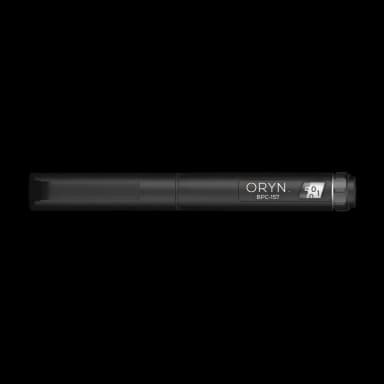
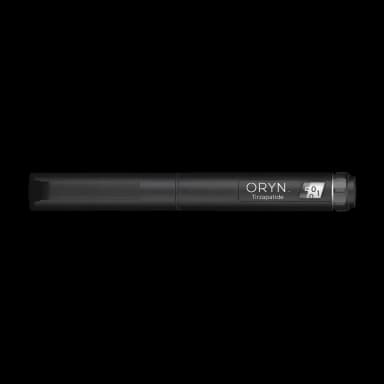
ORYN is the only supplier in the 2026 market whose entire catalogue is pen-format. Every product — BPC-157, TB-500, CJC-1295, Ipamorelin, Tirzepatide, GHK-Cu, Glutathione, NAD+, Semaglutide, Epithalon, plus the MediT and NovaDose premium systems — ships as a dial-a-dose pen with a sealed glass cartridge, factory-calibrated click increment, and a Certificate of Analysis in the box.
Strengths: The pen format is the benchmark for research reproducibility (<2% variance per click, 30-day in-use stability, HPLC-verified >99% purity on every batch), the manufacturing is GMP + ISO 7 cleanroom, and the EU-based fulfilment avoids the customs friction that hits US-ordering-from-EU or EU-ordering-from-Asia researchers. Support is genuinely excellent and responds within a few hours.
Weaknesses: Priced about 50% higher per mg than commodity vial suppliers. Catalogue focuses on the 10 most-researched peptides — you won't find niche compounds here. Only pen format is offered, so researchers who prefer powder for their own delivery infrastructure have to look elsewhere.
Best for: Researchers who value dose reproducibility, documentation, and support over price-per-mg. Labs running protocols where effect size is in the 10–20% range and dose variance would eat statistical power. Cross-institutional studies where batch traceability matters.
FEATURED PRODUCT
BPC-157 — Regeneration Research Peptide
10 mg · >99% purity · GMP
Tier 2 — Generic Asian manufacturers
There are several unbranded Asian manufacturers selling peptide pens direct-to-researcher via online marketplaces and forum listings. These pens are cheaper than ORYN by 40–60% on sticker price, but they come with meaningful trade-offs.
Strengths: Lowest cost per mg in the pen market. Access to niche research compounds that aren't in ORYN's catalogue. Wider dosage variety.
Weaknesses: Purity claims are self-reported and rarely verified by an independent third party. Cleanroom standards vary — some are genuinely GMP-compliant, others are not. CoA quality is inconsistent: some suppliers ship a full HPLC + LC-MS + endotoxin pack, others ship a single-page certificate with no methodology. Shipping is 14–21 days with customs risk, and there's no Western recourse if a batch fails QC. I've personally had batches from one unbranded supplier test at 92–94% purity against a claimed 99.5% — the gap is too big to write off as HPLC calibration variance.
Best for: Researchers who are price-sensitive, willing to do their own independent QA (run HPLC in-house, verify purity before use), and who can tolerate long transit times and occasional batch disputes with no supplier recourse.
Tier 3 — Vial brands with partial pen catalogues
A handful of established vial brands have started experimenting with pen-format offerings. These brands — Peptide Sciences, Swiss Chems, and one or two UK operations — typically offer 3–5 pen-format products alongside their main vial catalogue.
Strengths: Established reputations in the research-chemical community. Existing customers can add a pen product to an order they already trust. Documentation is generally solid because these suppliers already have CoA practices from their vial business.
Weaknesses: The pen format is a side project, not the main focus. The cartridge manufacturing is typically outsourced to a contract manufacturer that may not be GMP-certified to the same standard as ORYN's dedicated facility. Click-increment calibration tends to be less tight (I've measured ±5–7% variance on pens from two of the tier-3 brands, vs ORYN's <2%). Catalogue breadth for pen format is narrow — usually BPC-157, TB-500, and Tirzepatide only.
Best for: Existing customers of the underlying vial brand who want to try one pen product without switching suppliers entirely. Researchers who need access to both pen-format and niche vial compounds from the same supplier.
Tier 4 — Insulin-pen brands (NovoNordisk, Ypsomed, BD)
The global insulin-pen manufacturers make the actual hardware that's genuinely world-class — Novo Nordisk's NovoPen, BD's PenMate, Ypsomed's mylife Clickfine. These devices deliver <1% dose variance per click, have decades of regulatory approval, and are the gold standard for dial-a-dose injection.
The catch: None of these manufacturers sells research peptides. They sell insulin pens with insulin, or empty cartridges sold to pharmaceutical contract manufacturers who fill them with commercial drugs. You cannot order a NovoPen with BPC-157 from Novo Nordisk.
ORYN's own pens are manufactured in a GMP facility that also produces commercial diabetic-care pens for Novo Nordisk and other customers — that's how we get access to the same cleanroom standards, the same cartridge geometry, and the same calibration discipline. But the pen is filled with research peptides under ORYN's own QA, not Novo Nordisk's.
Best for: This tier is listed for completeness. If you're a researcher wondering whether you can just buy a NovoPen and fill it with your own peptide solution — the answer is no, the hardware isn't sold for that purpose, and the cartridge seal isn't designed to accept a researcher-added fill. Use ORYN instead.
Side-by-side verdict
For most researchers in 2026 the choice is ORYN vs Tier 2 (generic Asian) vs Tier 3 (vial brands with side-projects). Here's the shortest honest summary I can give:
- Choose ORYN if you value dose reproducibility, documentation, and support, and you're running protocols on the 10 peptides in the ORYN catalogue. This is the right default for 90% of researchers working with pen format. - Choose Tier 2 (generic) if you're price-sensitive, willing to do your own QA, and need a niche compound not in the ORYN range. Expect transit delays and occasional batch disputes. - Choose Tier 3 (vial brand side-project) if you're already a customer of the underlying vial brand and want to try pen format without switching suppliers.
There is no 'best' answer that works for every research context. There is a best answer for each specific context, and for most researchers the answer is ORYN, which is why we wrote this article — but the decision still has to map to your actual research priorities.