A comprehensive guide to understanding peptide purity testing methods. How HPLC, mass spectrometry, and endotoxin testing work, what the results mean, and how to read a Certificate of Analysis.
9 min read · Updated 2026-04-10
Why Peptide Purity Matters for Research
Peptide purity is arguably the single most important factor in research peptide quality. Impurities in peptide preparations can introduce confounding variables, produce false results, and compromise the integrity of an entire research programme.
Types of impurities in peptide preparations: - Deletion sequences: Peptides missing one or more amino acids from the target sequence - Truncated sequences: Incomplete synthesis products - Insertion sequences: Peptides with extra amino acids - Racemisation products: D-amino acid variants of the target L-amino acid sequence - Oxidation products: Methionine, cysteine, and tryptophan residues are particularly susceptible - Residual solvents and reagents: TFA (trifluoroacetic acid), ACN (acetonitrile) from purification - Endotoxins: Bacterial lipopolysaccharides that can trigger immune responses
Impact of impurities on research: Even small amounts of impurities can significantly affect research outcomes. A peptide preparation at 85% purity contains 15% of uncharacterised contaminants that could produce biological effects unrelated to the target peptide. This is why ORYN maintains a minimum purity standard of >99% for all products.
Understanding how purity is measured helps researchers evaluate supplier quality claims and make informed purchasing decisions.
HPLC: The Gold Standard for Purity Analysis
High-Performance Liquid Chromatography (HPLC) is the primary method used to assess peptide purity. It separates components in a mixture based on their interaction with a stationary phase, allowing identification and quantification of the target peptide and any impurities.
How HPLC works for peptides: 1. The peptide sample is dissolved and injected into the HPLC system 2. A mobile phase (typically water/acetonitrile gradient with TFA modifier) carries the sample through a C18 reverse-phase column 3. Different molecules interact differently with the column packing, causing them to elute (emerge) at different times 4. A UV detector (typically at 214nm or 220nm) measures the absorbance of each component as it elutes 5. The resulting chromatogram shows peaks representing each component
Interpreting HPLC results: - The target peptide appears as the main peak - Purity is calculated as the area of the main peak divided by the total area of all peaks, multiplied by 100 - >99% purity means the main peak accounts for more than 99% of the total UV absorbance - Minor peaks represent impurities (deletion sequences, oxidation products, etc.)
Limitations of HPLC: HPLC alone cannot confirm molecular identity. Two different peptides could theoretically have similar retention times. This is why mass spectrometry is used alongside HPLC for complete characterisation.
All ORYN products include HPLC analysis on the COA showing >99% purity.
FEATURED PRODUCT
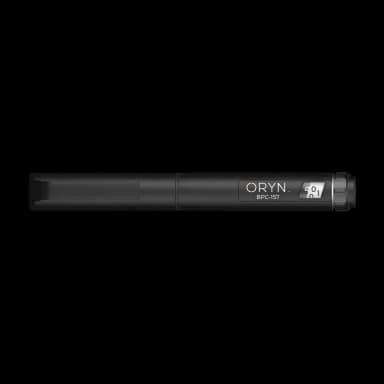
BPC-157 — Regeneration Research Peptide
10 mg · >99% purity · GMP
Mass Spectrometry: Confirming Molecular Identity
Mass spectrometry (MS) complements HPLC by confirming the molecular identity of the peptide. While HPLC tells you how pure the sample is, MS confirms that the main peak is actually the correct compound.
Common MS methods for peptides: - ESI-MS (Electrospray Ionisation): The most common method for peptide analysis. Converts peptides into gas-phase ions and measures their mass-to-charge ratio (m/z). Gentle ionisation preserves the intact peptide molecule - MALDI-TOF (Matrix-Assisted Laser Desorption/Ionisation - Time of Flight): Particularly useful for larger peptides and proteins. Provides accurate molecular weight measurement - LC-MS (Liquid Chromatography - Mass Spectrometry): Combines HPLC separation with MS detection, providing both purity and identity information in a single analysis
What MS results tell you: - The observed molecular weight should match the theoretical molecular weight of the target peptide within acceptable tolerance - For BPC-157 (molecular formula C62H98N16O22), the expected molecular weight is approximately 1419.5 Da - Discrepancies indicate incorrect peptide, modifications, or degradation
Why both HPLC and MS are needed: HPLC without MS could show 99% purity of the wrong compound. MS without HPLC could confirm the right compound but not reveal how much of the sample is impurities. Together, they provide a complete picture of peptide quality.
ORYN COAs include both HPLC and MS data for every batch.
Endotoxin Testing and Sterility
For peptides intended for injection-based research applications, endotoxin testing and sterility are critical quality parameters.
What are endotoxins? Endotoxins are lipopolysaccharides (LPS) from the outer membrane of Gram-negative bacteria. They are extremely potent biological contaminants that can trigger inflammatory responses at very low concentrations (nanograms per kilogram of body weight in animal models).
LAL (Limulus Amebocyte Lysate) testing: The standard method for endotoxin detection uses an extract from the blood of horseshoe crabs. The LAL reagent clots in the presence of endotoxins, allowing quantification. Acceptable limits for injectable research preparations are typically less than 0.25 EU/mL (endotoxin units per millilitre).
Sterility considerations: Peptide preparations for subcutaneous research use should be sterile-filtered through 0.22-micrometre filters. Pre-filled pen systems like ORYN products are factory-sterilised, eliminating the contamination risk associated with manual reconstitution from vials.
Advantages of pre-filled pens for sterility: - Factory-controlled sterile manufacturing environment - No manual reconstitution step that could introduce contamination - Sealed system reduces exposure to environmental microorganisms - Each pen undergoes quality control before release
ORYN peptide pens are manufactured under GMP conditions with sterile filtration. Endotoxin testing is part of the quality control process for every batch.
How to Read a Certificate of Analysis (COA)
A Certificate of Analysis (COA) is the most important document accompanying a research peptide purchase. It provides verified quality data for the specific batch you received.
Essential elements of a reliable COA: 1. Product identification: Peptide name, sequence, molecular formula, and molecular weight 2. Batch/lot number: Must match the number on the product label 3. HPLC purity: Percentage, method details (column type, mobile phase, detection wavelength) 4. MS data: Observed molecular weight vs. theoretical molecular weight 5. Endotoxin results: EU/mL value and pass/fail determination 6. Appearance: Visual description (e.g., clear colourless solution) 7. Date of analysis: When the testing was performed 8. Testing laboratory: Name and accreditation of the lab
Red flags in COAs: - Generic COAs not linked to a specific batch number - Missing MS data (HPLC alone is insufficient) - Testing lab not identified or not independently verifiable - Purity below 95% (for research-grade peptides) - No endotoxin testing for injectable preparations - Photocopied or digitally generic documents without specific batch data
ORYN COA standards: Every ORYN peptide pen ships with a batch-specific COA including HPLC purity (>99%), mass spectrometry confirmation, and endotoxin testing results. All manufacturing is GMP-certified in South Korea. COAs are available upon request before purchase.
All ORYN products are for research purposes only.