COMPLETE RESEARCH GUIDEPEPTIDE PEN
GHK-CU
Copper Peptide Research Compound
>99%60 mgFROM EUR 139
QUICK ANSWER
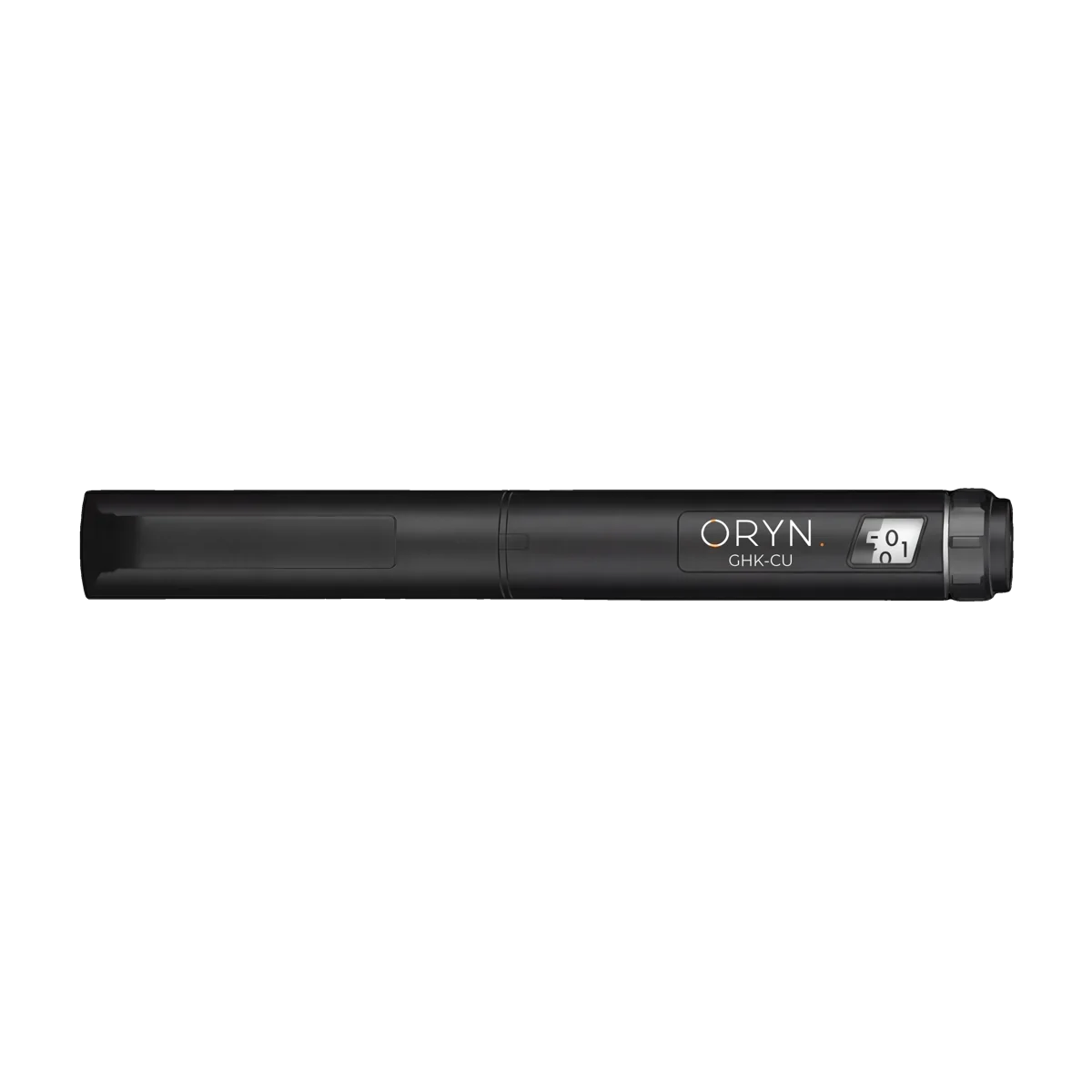
GHK-CU (copper peptide research compound) is a >99% purity research compound. A copper-binding tripeptide investigated for its role in tissue remodelling, collagen synthesis, and gene expression modulation. Studies suggest GHK-Cu may activate regenerative processes through copper-mediated signalling. ORYN delivers GHK-CU in a precision-dosed reusable pen starting from EUR 139. All products are for research purposes only.
Science & Research
FULL ENCYCLOPEDIA ENTRY →MOLECULAR PROFILE
FORMULA
C14H24CuN6O4
WEIGHT
403.92 Da
CLASSIFICATION
Copper Tripeptide / Matrikine
STUDIES CITED
4 key studies
Mechanism of Action
GHK-Cu (glycyl-L-histidyl-L-lysine copper) is a naturally occurring tripeptide with a remarkably high affinity for copper(II) ions. It functions as a matrikine — a small peptide derived from extracellular matrix proteins that signals tissue repair and remodelling processes.
READ FULL MECHANISM →Key Published Studies
2012
The human tripeptide GHK-Cu in the prevention of oxidative stress and degenerative conditions of aging
Demonstrated GHK-Cu resets the expression of 4,000+ human genes, with broad anti-aging effects on DNA repair, oxidative stress response, and tissue remodelling pathways.
2007
GHK-Cu promotes hair follicle growth and increases follicle size
Showed GHK-Cu enlarges hair follicles, extends the anagen (growth) phase, and stimulates dermal papilla cell proliferation — key findings for hair loss research.
2000
Copper peptide GHK-Cu and skin collagen synthesis
Established that GHK-Cu stimulates collagen I and III synthesis in human fibroblasts, with effects exceeding those of retinoic acid in controlled comparisons.
2015
Anti-inflammatory activity of the peptide GHK-Cu after acute lung injury
Demonstrated potent anti-inflammatory effects in lung tissue, reducing TNF-alpha and IL-6 while promoting tissue repair — expanding applications beyond dermatology.
Research History
GHK-Cu was first identified in human plasma in 1973 by Dr. Loren Pickart, who observed that plasma from young individuals (age 20-25) could stimulate older liver cells to produce proteins characteristic of younger tissue. The active factor was isolated and identified as a tripeptide complexed with copper.
FULL RESEARCH HISTORY →ORYN GHK-CU Product
PEPTIDE PEN
GHK-CU — Copper Peptide Research Compound
A copper-binding tripeptide investigated for its role in tissue remodelling, collagen synthesis, and gene expression modulation. Studies suggest GHK-Cu may activate regenerative processes through copper-mediated signalling. ORYN GHK-CU delivers a potent 60mg formulation via reusable pen system for 30 days.
PURITY
>99%
FILL VOLUME
3 mL
DOSAGE
60 mg
FORMULATION
Pharma Grade
DOSING PERIOD
30 Days
STERILIZATION
0.22um Filter + Gamma Ray
EUR 139VIEW PRODUCT DETAILS
Articles & Guides
ALL ARTICLES →GUIDES
How to Use a Peptide Pen: Step-by-Step Guide
Step-by-step instructions for using ORYN peptide pen systems. From unboxing to administration, everything you need to know.
5 min read
PEPTIDE RESEARCH
GHK-Cu: The Copper Peptide Revolution for Skin Research
A deep dive into GHK-Cu — the copper-binding peptide transforming skin research. From collagen stimulation to wound remodelling, discover why researchers are turning to this remarkable tripeptide.
9 min read
GUIDES
Peptide Storage Guide: Temperature, Shelf Life & Best Practices
Proper peptide storage is critical for maintaining potency and research reliability. Learn the best practices for temperature control, shelf life management, and safe transport.
7 min read
PEPTIDE RESEARCH
BPC-157 vs TB-500: Which Recovery Peptide Is Right for You?
A detailed head-to-head comparison of BPC-157 and TB-500 — the two most popular recovery peptides in the UK research community. Understand their distinct mechanisms and when to use each.
9 min read
BUYING GUIDES
How to Buy Peptides Online in the UK: 2026 Definitive Guide
Your complete guide to safely purchasing research peptides online in the UK, including how to verify quality, spot scams, and choose the right supplier.
9 min read
PRODUCT GUIDES
GHK-Cu Copper Peptide: Hair Growth & Skin Rejuvenation Research UK
An in-depth research guide to GHK-Cu copper peptide: its mechanisms in hair growth, skin rejuvenation, wound healing, and anti-aging applications.
9 min read
Head-to-Head Comparisons
ALL COMPARISONS →COMPARISON
GHK-Cu vs Glutathione: Anti-Aging & Skin Peptides Compared
GHK-CUVSGlutathione
GHK-Cu and Glutathione target different anti-aging pathways and are highly complementary. GHK-Cu excels at structural repair (collagen, elastin), while Glutathione provides master antioxidant defence and skin brightening. Together, they form a comprehensive anti-aging research protocol.
COMPARISON
BPC-157 vs GHK-Cu: Recovery Peptide vs Skin Repair Compared
BPC-157VSGHK-CU
BPC-157 and GHK-Cu serve fundamentally different primary purposes. BPC-157 is the gold standard for internal tissue recovery — gut healing, tendon repair, and neuroprotection. GHK-Cu excels at skin and structural protein repair — collagen synthesis, wound healing, and anti-aging. Choose based on your primary research focus, or consider both for comprehensive tissue repair protocols.
COMPARISON
Glutathione Injection vs Oral Supplements: Bioavailability Compared
GlutathioneVSGHK-CU
Injectable Glutathione via ORYN's pen system is vastly superior to oral Glutathione supplements in the metric that matters most: bioavailability. Oral Glutathione is largely destroyed during digestion, with estimates of only 5-15% reaching systemic circulation. ORYN's pen delivery bypasses the digestive system entirely, providing near-complete absorption of the full 6g dose. For serious research, injectable delivery is the clear choice.
COMPARISON
GHK-Cu vs BPC-157: Skin Repair vs Tissue Recovery Compared
GHK-CUVSBPC-157
GHK-Cu is the superior choice for skin repair, collagen synthesis, and anti-ageing research. BPC-157 is the stronger option for internal tissue recovery — gut healing, tendon repair, and neuroprotection. They target different tissue systems with minimal overlap, making combination protocols highly logical for researchers studying comprehensive tissue repair.
COMPARISON
Glutathione vs GHK-Cu for Skin: Antioxidant vs Copper Peptide
GlutathioneVSGHK-CU
Glutathione and GHK-Cu both benefit the skin but through fundamentally different mechanisms. Glutathione excels at skin brightening through melanin regulation and provides master antioxidant defence against oxidative damage. GHK-Cu excels at structural repair — stimulating collagen, elastin, and hyaluronic acid production to rebuild the skin's framework. For comprehensive skin research, both are valuable and highly complementary.
COMPARISON
TB-500 vs GHK-Cu for Wound Healing: Which Heals Better?
TB-500VSGHK-CU
TB-500 and GHK-Cu both promote wound healing but through different mechanisms. TB-500 excels at the early stages — cell migration, angiogenesis, and inflammation reduction. GHK-Cu excels at the remodelling stage — collagen synthesis, scar reduction, and structural protein restoration. For comprehensive wound healing research, the combination covers both phases of the healing process.
COMPARISON
GHK-Cu vs NAD+: Which Anti-Ageing Peptide Is Right for You?
GHK-CUVSNAD+
GHK-Cu and NAD+ are both powerful anti-ageing compounds, but they target entirely different ageing mechanisms. GHK-Cu addresses the visible signs of ageing — skin laxity, wrinkles, thinning hair, and slow wound healing — by stimulating structural protein production. NAD+ addresses the invisible, cellular foundations of ageing — declining energy production, accumulating DNA damage, and silenced longevity genes. For comprehensive anti-ageing research, the combination covers both the structural and metabolic dimensions of age-related decline.
COMPARISON
BPC-157 vs GHK-Cu: Tissue Repair vs Skin & Hair Regeneration
BPC-157VSGHK-CU
BPC-157 dominates deep tissue repair -- tendons, gut lining, nerves -- while GHK-Cu is the clear leader for skin rejuvenation, hair follicle stimulation, and structural protein remodelling. They target fundamentally different tissue layers and are highly complementary for researchers studying whole-body regeneration.
COMPARISON
GHK-Cu vs Retinol: Peptide vs Vitamin A for Skin Research
GHK-CUVSGlutathione
GHK-Cu and retinol both stimulate collagen production but through entirely different mechanisms. GHK-Cu works via copper-mediated gene expression resetting and direct structural protein activation, while retinol works via retinoic acid receptor signalling. GHK-Cu offers broader biological effects (4,000+ genes) with excellent tolerability, while retinol has a longer clinical track record but significant irritation concerns. For researchers seeking a peptide-based approach with multi-pathway benefits, GHK-Cu is the more advanced option.
Research Protocols
ALL PROTOCOLS →ANTI-AGING
12-16 weeksNAD+ + GHK-Cu Anti-Aging Protocol
Cellular Rejuvenation & Skin Remodeling Stack
NAD+GHK-CU
ANTI-AGING
8-12 weeksGHK-Cu Skin & Hair Protocol
Copper Peptide Skin Remodeling & Follicle Activation
GHK-CU
RECOVERY
6-10 weeksBPC-157 + TB-500 + GHK-Cu Wound Healing Protocol
Triple-Peptide Comprehensive Wound Repair Stack
BPC-157TB-500GHK-CU
ANTI-AGING
12-24 weeksGHK-Cu Hair Growth Protocol
Copper Peptide Follicle Stimulation & Hair Cycle Modulation
GHK-CU
Frequently Asked Questions
FULL FAQ →What is GHK-Cu and why is it significant?
+
GHK-Cu is a naturally occurring copper tripeptide (Gly-His-Lys bound to copper) first discovered in human plasma. It is significant because it can reset the expression of over 4,000 genes toward a healthier state — affecting DNA repair, antioxidant defence, collagen synthesis, and stem cell biology. It is one of the most versatile peptides in regenerative research.
How does GHK-Cu benefit skin and hair?
+
GHK-Cu stimulates collagen I and III synthesis, increases elastin production, promotes hyaluronic acid accumulation, and modulates tissue remodelling. For hair, it enlarges follicles, extends the growth (anagen) phase, and stimulates dermal papilla cells. Over 70 studies support these findings across dermatology and trichology.
What is unique about GHK-Cu's gene expression effects?
+
Genomic studies have shown GHK-Cu modulates over 4,000 human genes — an extraordinary range for a tripeptide. It upregulates genes involved in DNA repair, antioxidant defence, and stem cell function, while suppressing genes associated with inflammation, fibrosis, and tissue degradation. This broad gene-resetting capability is unique among peptides.
How does ORYN deliver GHK-Cu?
+
ORYN GHK-Cu is formulated at a potent 60mg dose in a 3mL precision pen system with >99% purity. This is one of the highest concentrations available for research, delivered in a pre-mixed pen that maintains copper peptide stability and provides consistent 30-day dosing.
What is GHK-Cu?
+
GHK-Cu is a naturally occurring copper-binding tripeptide (three amino acids: glycine, histidine, and lysine) complexed with a copper(II) ion. It is found in human plasma, saliva, and urine, with concentrations that decline with age. ORYN GHK-Cu is formulated at >99% purity with a potent 60 mg dose in a precision pen system.
How does GHK-Cu work?
+
GHK-Cu is thought to modulate gene expression related to collagen synthesis, glycosaminoglycan production, and antioxidant defence. Research indicates it can upregulate genes involved in tissue remodelling while downregulating inflammatory and tissue-destructive genes. The copper ion is essential for many enzymatic processes including lysyl oxidase activity, which is critical for collagen and elastin cross-linking.
What is GHK-Cu used for in research?
+
GHK-Cu is studied for skin rejuvenation, wound healing, collagen synthesis, scar remodelling, hair growth, antioxidant defence, anti-inflammatory activity, and age-related tissue decline. Its ability to influence over 4,000 genes (as documented in genomic studies) makes it a remarkably versatile research compound.
How is ORYN GHK-Cu administered?
+
ORYN GHK-Cu is delivered via a pre-mixed pen containing 60 mg in 3 mL of solution. The pen is designed for subcutaneous injection with precise dosing. The high 60 mg concentration makes this one of the most potent GHK-Cu formulations available for research.
Explore More ORYN Products


RESEARCH PURPOSES ONLY. All content on this page is intended for informational and educational purposes for qualified researchers. ORYN products are not approved as medicines and are not intended for human therapeutic use. Do not use ORYN products for self-administration. Consult relevant regulations in your jurisdiction.