A clear explanation of the molecular and functional differences between TB4 Fragment and TB-500 for researchers. Covering structural biology, mechanism of action, published research data, and guidance on selecting the right compound for specific research applications.
8 min read · Updated 2026-04-10
Thymosin Beta-4: The Parent Molecule
To understand the difference between TB4 Fragment (TB4-Frag) and TB-500, it is essential to start with their parent molecule: Thymosin Beta-4 (TB4).
Thymosin Beta-4 is a 43-amino acid polypeptide with a molecular weight of approximately 4,921 Da. It was first isolated from the thymus gland in the 1960s by Allan Goldstein and is now known to be expressed in virtually all nucleated cells in the body. TB4 is the most abundant member of the beta-thymosin family and plays a fundamental role in cellular biology.
TB4 Primary Functions: - Actin sequestration: TB4's primary intracellular function is binding G-actin (monomeric actin), preventing its polymerisation into F-actin (filamentous actin). This actin-regulating activity is central to cell motility, migration, and morphology. - Cell migration: By modulating the actin cytoskeleton, TB4 promotes cell migration -- a critical process in wound healing, tissue repair, and development. - Anti-inflammatory activity: TB4 has been shown to downregulate inflammatory mediators in multiple research models. - Angiogenesis: TB4 promotes new blood vessel formation, supporting tissue repair and regeneration.
The full-length TB4 molecule contains multiple functional domains, and researchers have investigated whether specific fragments retain some or all of the parent molecule's biological activity. This is where TB4-Frag and TB-500 enter the picture.
Understanding which portion of the TB4 molecule each compound represents is critical for researchers designing protocols and interpreting results. The naming conventions in the peptide industry can be confusing, and this guide aims to provide clarity.
TB-500: The Active Fragment
TB-500 is the name most commonly used in the research peptide market for a specific active fragment of Thymosin Beta-4. Understanding exactly what TB-500 is -- and what it is not -- is important for researchers.
What TB-500 Is: TB-500 refers to a synthetic peptide corresponding to the active region of Thymosin Beta-4, specifically the amino acid sequence that contains the actin-binding domain. The key functional motif is the sequence LKKTETQ (amino acids 17-23 of full-length TB4), which is the minimal actin-binding and cell migration-promoting sequence identified in published research.
In practice, TB-500 as sold by research peptide suppliers typically refers to a peptide of approximately 17 amino acids centred on this active domain, though exact sequences can vary between suppliers. The molecular weight is approximately 2,000 Da -- significantly smaller than the full 43-amino acid TB4 molecule.
Key Properties of TB-500: - Contains the LKKTETQ actin-binding motif - Promotes cell migration in published in vitro and in vivo studies - Shows anti-inflammatory activity in preclinical research - Promotes angiogenesis (new blood vessel formation) - More stable than full-length TB4 due to shorter sequence - Better tissue penetration due to smaller molecular size - Research doses are typically in the microgram to low milligram range
Why TB-500 Instead of Full-Length TB4? Full-length TB4 (43 amino acids) is more expensive to synthesise, less stable, and the functional activity relevant to most research applications is concentrated in the active fragment. TB-500 provides the biologically active region in a more practical and cost-effective format.
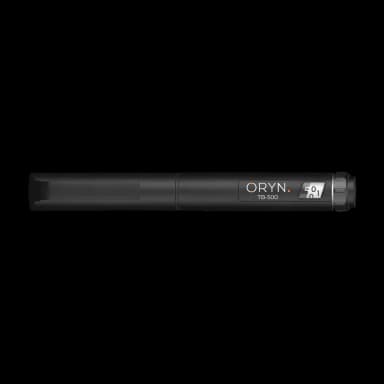
ORYN's TB-500 peptide pen contains research-grade TB-500 at >99% purity, pre-filled and factory-calibrated for consistent dosing.
FEATURED PRODUCT
TB-500 — Cell Migration Research Peptide
15 mg · >99% purity · GMP
TB4-Frag: Shorter Fragment Variants
The term "TB4-Frag" (or "TB4 Fragment") is used in the peptide research market to refer to various shorter fragments of Thymosin Beta-4. This is where terminology becomes less standardised, and researchers need to exercise diligence.
Common TB4 Fragment Designations:
1. TB4-Frag (Ac-SDKP): The N-terminal tetrapeptide of TB4, consisting of the sequence Ac-Ser-Asp-Lys-Pro. This is the most commonly referenced "TB4 Fragment" in published research. Ac-SDKP is released from TB4 by the enzyme prolyl oligopeptidase (POP) and has its own distinct biological activities: - Anti-fibrotic effects: inhibits collagen deposition in multiple organ models - Anti-inflammatory properties: reduces inflammatory cell infiltration - Regulated by ACE (angiotensin-converting enzyme), which degrades Ac-SDKP - Does NOT contain the LKKTETQ actin-binding motif - Molecular weight: approximately 487 Da (much smaller than TB-500)
2. Other TB4 Fragments: Various other fragments of TB4 have been synthesised and investigated in research: - TB4(1-15): N-terminal fragment containing Ac-SDKP plus additional residues - TB4(17-23): the minimal LKKTETQ motif (essentially the core of TB-500) - TB4(1-4) sulfoxide: oxidised form of the N-terminal fragment
Critical Difference from TB-500: The most important distinction for researchers is that "TB4-Frag" (when referring to Ac-SDKP) does NOT contain the actin-binding domain that drives TB-500's cell migration and tissue repair effects. TB4-Frag (Ac-SDKP) has anti-fibrotic activity, while TB-500 has tissue repair and cell migration activity. These are different biological functions mediated by different regions of the parent molecule.
When purchasing "TB4 Fragment," researchers must verify exactly which fragment is being supplied, as the biological activity differs dramatically depending on the sequence.
Research Data: Comparing Activities
Published research has investigated both TB-500 (active region) and TB4-Frag (Ac-SDKP) extensively, but for different applications. Understanding these differences is critical for protocol design.
TB-500 Research Focus: - Tissue repair: Multiple preclinical studies have demonstrated TB-500's ability to promote healing in tendon, muscle, skin, and corneal injury models - Cell migration: The LKKTETQ motif drives cell migration in wound healing assays, with published dose-response data - Cardiac research: TB4/TB-500 has been investigated in cardiac injury models, with studies showing improved outcomes in preclinical infarction models - Combinability: TB-500 is commonly combined with BPC-157 in research protocols, with published data suggesting complementary mechanisms - Anti-inflammatory: TB-500 reduces inflammatory markers in tissue injury models
TB4-Frag (Ac-SDKP) Research Focus: - Anti-fibrotic: The primary research application. Ac-SDKP has been extensively studied in cardiac, renal, and hepatic fibrosis models - Stem cell regulation: Ac-SDKP has been shown to maintain haematopoietic stem cells in a quiescent state, preventing premature differentiation - ACE inhibitor interaction: Because ACE degrades Ac-SDKP, ACE inhibitor drugs increase endogenous Ac-SDKP levels. This has implications for cardiovascular research - Anti-inflammatory: via different pathways than TB-500, primarily reducing macrophage infiltration
Head-to-Head Considerations: - For tissue repair research: TB-500 is the appropriate choice - For anti-fibrotic research: TB4-Frag (Ac-SDKP) may be more relevant - For general regenerative biology: TB-500 has a broader activity profile - For combination with BPC-157: TB-500 is the established partner
Purity Matters: Because TB4-Frag (Ac-SDKP) is a very small peptide (4 amino acids), impurities can represent a proportionally larger fraction of the total material. This makes supplier quality and COA verification even more critical for fragment purchases.
ORYN offers TB-500 (the active fragment with the LKKTETQ motif) as a pre-filled peptide pen at >99% purity, GMP certified. This is the fragment most widely used in tissue repair and regenerative research.
Choosing Between TB4-Frag and TB-500
For researchers deciding between TB4-Frag and TB-500, the choice should be driven by the specific biological pathway being investigated.
Choose TB-500 When: - Studying tissue repair, wound healing, or regenerative biology - Investigating cell migration and actin dynamics - Designing combination protocols with BPC-157 (the BPC-157 + TB-500 stack) - Researching angiogenesis and new blood vessel formation - Working in musculoskeletal, tendon, or ligament research models - Seeking the broadest activity profile from a single TB4-derived compound - Want the most widely used and published fragment for TB4 research
Choose TB4-Frag (Ac-SDKP) When: - Studying fibrosis (cardiac, renal, hepatic, or pulmonary) - Investigating haematopoietic stem cell regulation - Researching ACE inhibitor mechanisms and Ac-SDKP pharmacology - Studying anti-fibrotic pathways specifically (not general tissue repair) - Working in cardiovascular research focused on remodelling
Important Verification Steps: When purchasing any TB4-derived peptide: 1. Request the exact amino acid sequence from the supplier 2. Verify the COA includes mass spectrometry confirming molecular identity 3. Check HPLC purity (minimum 98%, ideally >99%) 4. Confirm the product matches your research requirements 5. Do not assume "TB4 Fragment" and "TB-500" are the same product
ORYN's TB-500: ORYN offers TB-500 as a pre-filled peptide pen containing the active fragment of Thymosin Beta-4 with the LKKTETQ actin-binding domain. Key specifications: - >99% HPLC purity - GMP-certified manufacturing - Mass spectrometry confirmed molecular identity - Factory-calibrated dosing with less than 2% variance - Pre-filled format -- no reconstitution required - Ships from EU: next-day UK delivery, 3-5 days EU
For the majority of researchers working in the tissue repair and regenerative biology space, TB-500 is the appropriate compound. Its combination with BPC-157 remains one of the most popular and well-studied peptide stacks in current research.
All ORYN products are sold for research purposes only.