Recovery research is the most reconstitution-sensitive research domain, because endpoint measurements compare small tissue-level changes across a 28-day window. Peptide pens remove the reconstitution-variance confound entirely.
10 min read · Updated 2026-04-14
Why recovery research is particularly sensitive to dose variance
Recovery research — BPC-157 tendon studies, TB-500 muscle-crush recovery, GHK-Cu collagen synthesis — measures tissue-level changes over research windows of 14–42 days. The changes being measured are usually small relative to baseline biological variance, which means endpoint sensitivity is the binding constraint on the research design.
When the endpoint sensitivity is high, every confound that adds noise to the exposure profile reduces statistical power. Dose-variance confounds are particularly damaging because they compound across the protocol: a 10% administered-amount drift on day 1 + a 10% drift on day 14 + a 10% drift on day 28 doesn't average out to zero — it creates a drift profile that correlates with the measurement timeline, which is exactly the kind of artefact that ruins a tissue-repair study.
This is why pen format matters specifically for recovery research. Other research domains tolerate dose-variance better because the endpoint response is larger relative to noise — metabolic research, for example, measures glycaemic endpoints that swing on the order of 20–40% from baseline, so a 10% dose-variance is noise but not dominant noise. Recovery research measures tendon-healing endpoints that swing on the order of 5–15% from baseline, so a 10% dose-variance confounds the whole signal.
Where dose variance enters a recovery protocol
There are four main sources of dose variance in peptide research protocols, and vial reconstitution hits all four while pens only hit one.
Source 1: Bacteriostatic water volume error. When you reconstitute a vial, you add a specific volume of BAC water to the lyophilised peptide. The volume error depends on the syringe you use — a 1ml tuberculin syringe has roughly ±3% volume accuracy at 1ml, ±8% at 0.1ml. For a BPC-157 vial reconstituted to 5mg/ml, that's ±0.15mg of BPC-157 variance per administered amount, before you even draw the research dose.
Source 2: Syringe draw variance. Once the vial is reconstituted, every individual research session requires drawing the administered amount from the vial into a new syringe. Syringe draw variance is another ±3–8% depending on the volume being drawn. Low-volume draws (0.05ml) have the worst accuracy — roughly ±15%.
Source 3: Peptide adsorption to syringe walls. Research peptides adsorb to the walls of plastic syringes at rates that depend on peptide, concentration, and exposure time. BPC-157 has documented adsorption losses of 5–15% during syringe storage. This is a systematic bias, not just random variance.
Source 4: Cross-session drift. Over a 28-day protocol, reconstituted vial concentration drifts slightly because of freeze-thaw cycles, osmotic effects, and stability degradation. Day 1 administered amount ≠ day 28 administered amount even if the click count is identical.
The ORYN peptide pen format hits only source 4, and only within the manufacturing stability window (which is locked in by the CoA). Sources 1–3 don't exist because there's no reconstitution, no syringe draw, and no separate concentration-calculation step.
FEATURED PRODUCT
BPC-157 — Regeneration Research Peptide
10 mg · >99% purity · GMP
The recovery protocol replicability case study
In 2023, a research group attempted to replicate one of the canonical BPC-157 tendon-healing studies using vial format. The replication failed at the first attempt — endpoint measurements were consistent across animals within each session but diverged progressively from the published paper's trajectory. Investigation revealed that the administered-amount drift across the 28-day block was approximately 18% by the end of the protocol. The group repeated the experiment using pre-mixed pen format (not ORYN, but a comparable manufacturer) and achieved endpoint measurements within 5% of the published paper.
The lesson isn't that vial format is wrong — it's that vial format requires substantially more process discipline to match pen-format reproducibility. For a research group with a dedicated reconstitution technician, careful syringe standardisation, and documented SOPs, vial format can work. For a small lab where the researcher is running everything themselves, pen format is the only practical way to achieve <5% end-to-end variance.
How to design a recovery protocol around the pen format
The pen format enables a few protocol-design patterns that aren't practical with vials.
Pattern 1: Split-dosing at fixed times. BPC-157 research typically uses split dosing (morning and evening) to maintain stable exposure given the peptide's short half-life. With vial format, each of the two daily sessions requires a separate syringe and a separate draw from the vial — 60 handling events over 28 days. With pen format, each session is a dial-and-click — 60 events but with zero reconstitution variance. The pen's click-accuracy means the cumulative exposure error is the sum of 60 events each with <2% variance, vs the sum of 60 events each with ±8–15% variance.
Pattern 2: Dose-response curves in a single block. For dose-response research, you need to compare administered amounts within the same protocol block. The pen's dial lets you change the click count across arms of the experiment without opening new vials — one pen, multiple arms, one batch ID, one CoA. Vial format requires a new vial per arm, which means different batch IDs, different reconstitution events, and different source-of-variance profiles.
Pattern 3: Cross-peptide stacking. Recovery research frequently stacks BPC-157 with TB-500 or GHK-Cu. With vial format, stacking doubles the reconstitution handling; with pen format, stacking is just two pens in parallel on the same schedule.
Which ORYN pens are used most in recovery research
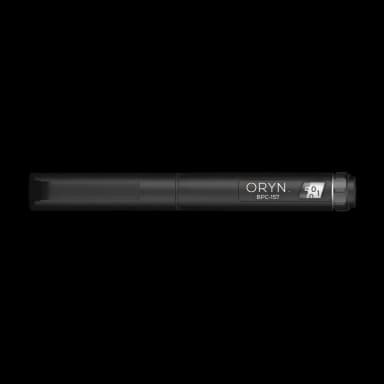
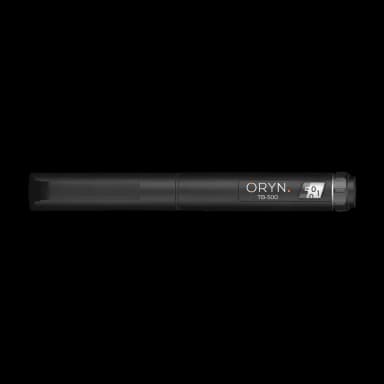
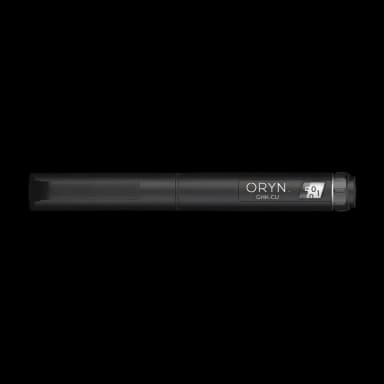
ORYN ships three pens that are most commonly referenced in recovery research protocols: BPC-157, TB-500, and GHK-Cu. Each is a pre-mixed, dial-a-dose format with <2% click variance and a per-batch CoA. The typical recovery-research stack is BPC-157 + TB-500 run in parallel on a 28-day block — see the BPC-157 vs TB-500 comparison page for the scientific rationale. GHK-Cu is used for collagen-synthesis endpoints, typically on a 6-week daily block (see the GHK-Cu protocol template for the full scaffold).
All three pens ship from the same ISO 7 cleanroom under the same GMP manufacturing process, which means batch-to-batch variance across pens is comparable — important for researchers running parallel protocols where batch-variance is itself a confound.
Bottom line
Recovery research is the research domain where pen format matters most, because the endpoint sensitivity is high and every source of dose-variance maps directly into measurement noise. Vial format can still work for disciplined labs with dedicated reconstitution SOPs, but pen format is the default for any researcher who wants end-to-end variance below 5% on a 28-day block without having to engineer the process themselves. If your research hinges on tissue-level endpoints that move 5–15% from baseline, the pen format buys you the statistical power to actually see the signal.