A comprehensive guide to peptide stacking for UK-based researchers. Covering synergy principles, the most popular and well-studied peptide combinations, timing and protocol design, and practical considerations for implementing multi-peptide research protocols.
10 min read · Updated 2026-04-10
What Is Peptide Stacking? Principles of Synergy
Peptide stacking refers to the practice of using two or more peptide compounds simultaneously or sequentially within a research protocol. The rationale is based on the principle of pharmacological synergy: when compounds with complementary mechanisms of action are combined, the resulting effect can exceed what either compound would achieve alone.
True synergy is distinct from simple additive effects. An additive combination produces an effect equal to the sum of each compound's individual effect. A synergistic combination produces an effect greater than this sum. In pharmacology, synergy typically occurs when compounds act on different targets within the same biological pathway, or on parallel pathways that converge on a shared downstream outcome.
Why Stack Peptides? - Target multiple biological pathways simultaneously - Potentially achieve research endpoints more efficiently - Investigate interactions between signalling systems - Model complex biological responses more realistically than single-compound studies - Some combinations are well-studied with published data supporting synergistic effects
Key Principles for Effective Stacking: 1. Complementary mechanisms: choose compounds that act on different targets 2. Non-overlapping side effect profiles: minimise cumulative risk 3. Compatible pharmacokinetics: consider half-lives and optimal administration timing 4. Published precedent: prefer combinations with existing research support 5. Consistent quality: use the same grade (>99% purity) for all compounds in a stack
ORYN offers a range of research peptides in pre-filled pen format, all at >99% purity with GMP certification, making it straightforward for UK researchers to implement multi-peptide protocols with consistent quality across all compounds.
The Classic Stacks: BPC-157 + TB-500 and CJC-1295 + Ipamorelin
Two peptide combinations stand out as the most widely studied and commonly used in the research community. Both have published data supporting their synergistic potential.
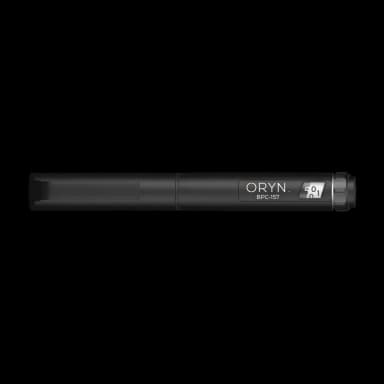
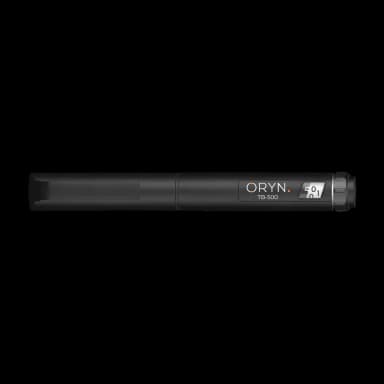
BPC-157 + TB-500 (Tissue Repair Stack): This is arguably the most popular peptide combination in current research. The rationale is based on complementary mechanisms: - BPC-157 acts primarily through angiogenesis promotion (VEGF upregulation), nitric oxide system modulation, and GH receptor interaction - TB-500 (thymosin beta-4 fragment) acts through actin sequestration, promoting cell migration, and reducing inflammation via different pathways than BPC-157
When combined, these compounds address tissue repair from multiple angles simultaneously. Published preclinical research has investigated this combination in tendon, muscle, and gastrointestinal models, reporting enhanced outcomes compared to either compound alone.
Protocol considerations: - Both can be administered SC at the same time of day - No known negative interactions between the compounds - Standard research doses of each are used (not reduced when stacking) - Available from ORYN as individual pre-filled pens
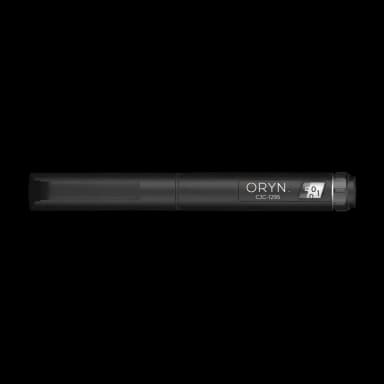
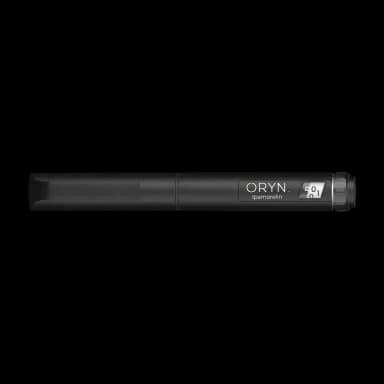
CJC-1295 + Ipamorelin (Growth Hormone Axis Stack): This combination targets the GH axis through two complementary receptor pathways: - CJC-1295 (GHRH analogue) activates GHRH receptors on pituitary somatotrophs - Ipamorelin (ghrelin mimetic) activates GHS-R1a receptors through a separate signalling cascade
Published research has demonstrated that simultaneous GHRH + GHRP stimulation produces GH release significantly greater than either pathway alone. This is true pharmacological synergy, well-documented in the endocrinology literature.
Protocol considerations: - Typically administered together 1-3 times daily - Pre-sleep dosing aligns with natural GH secretion patterns - Both available from ORYN as individual pre-filled pens - The combination maintains physiological feedback regulation (unlike exogenous HGH)
FEATURED PRODUCT
BPC-157 — Regeneration Research Peptide
10 mg · >99% purity · GMP
Advanced Stacks: Multi-Peptide Protocols
Beyond the classic two-peptide combinations, some researchers implement more complex multi-peptide protocols. These require careful design to manage variables and ensure interpretable results.
Comprehensive Recovery Stack (BPC-157 + TB-500 + CJC-1295 + Ipamorelin): This four-peptide combination aims to simultaneously support tissue repair (BPC-157 + TB-500) and GH-axis optimisation (CJC-1295 + ipamorelin). The rationale is that GH elevation enhances the tissue repair processes stimulated by BPC-157 and TB-500. - Protocol: BPC-157 + TB-500 administered in the morning; CJC-1295 + ipamorelin administered pre-sleep - Splitting administration times reduces injection burden and aligns GH secretagogues with natural nocturnal GH release
Cellular Health Stack (NAD+ + Glutathione): This combination targets cellular energy and antioxidant defence: - NAD+ supports mitochondrial function, sirtuin activation, and DNA repair - Glutathione provides intracellular antioxidant protection and supports detoxification - Both compounds are naturally occurring in the body and are well-characterised - Some researchers add GHK-Cu for its tissue remodelling and anti-inflammatory properties
Anti-Ageing Research Stack (NAD+ + GHK-Cu + CJC-1295/Ipamorelin): This combination targets three pillars of ageing research: - NAD+ for cellular energy and epigenetic regulation - GHK-Cu for tissue remodelling and gene expression modulation - CJC-1295/Ipamorelin for GH-axis support (GH declines with age)
Important Caveats for Multi-Peptide Protocols: - More compounds = more variables = harder to attribute effects to specific compounds - Consider starting with one or two compounds and adding others sequentially - Document everything meticulously -- dose, timing, injection site, lot number - Use consistent, high-quality sources for all compounds (mixing suppliers introduces quality variables) - All ORYN pens are >99% purity and GMP certified, ensuring consistency across a multi-peptide protocol
Timing and Protocol Design for UK Researchers
Optimal timing of peptide administration within a stacking protocol can influence research outcomes. Here is a framework based on published pharmacology and practical experience from the research community.
Morning Administration: Best for compounds where you want to assess effects during the active/waking period: - BPC-157: can be administered any time; morning dosing is common - TB-500: similarly flexible; morning administration is standard - GHK-Cu: typically administered in the morning
Pre-Sleep Administration (30-60 minutes before sleep): Best for GH secretagogues to align with natural nocturnal GH release: - CJC-1295 (without DAC): pre-sleep dosing amplifies the natural GH pulse that occurs during slow-wave sleep - Ipamorelin: same rationale -- pre-sleep administration synergises with endogenous GHRH release
Twice-Daily Split (for multi-peptide stacks): - AM: BPC-157 + TB-500 (and/or GHK-Cu, NAD+) - PM (pre-sleep): CJC-1295 + Ipamorelin - This split reduces the number of simultaneous injections and aligns each compound with its optimal pharmacological window
Protocol Duration Guidelines: - Tissue repair stacks (BPC-157 + TB-500): 4-12 weeks typically - GH-axis stacks (CJC-1295 + Ipamorelin): 8-16 weeks - Cellular health stacks (NAD+ + glutathione): 4-12 weeks - Some researchers implement cycling: 8 weeks on, 4 weeks off, repeat
UK-Specific Considerations: - All ORYN peptides ship from the EU with next-day UK delivery - No customs issues for research chemicals entering the UK from the EU (post-Brexit research chemical import remains straightforward) - Store pens at 2-8 degrees Celsius upon receipt - UK researchers benefit from ORYN's competitive GBP pricing and free shipping over GBP 130
Document all protocol parameters in a research log. Consistency is the foundation of interpretable results.
Safety Considerations and Interaction Monitoring
While peptide stacking is widely practised in the research community, responsible protocol design requires attention to safety and potential interactions.
General Safety Principles for Stacking: - Start each new compound individually before combining. This allows you to establish baseline responses and identify any compound-specific effects before introducing variables. - Add compounds one at a time when building a stack. If adverse effects occur in a multi-peptide protocol, it is impossible to identify the cause if all compounds were started simultaneously. - Use published dose ranges for each compound. Do not reduce individual doses when stacking unless there is a specific pharmacological reason to do so. - Monitor for cumulative effects, particularly water retention (GH secretagogues) and injection site reactions.
Known Interaction Considerations: - BPC-157 + TB-500: No negative interactions reported in published literature. Complementary mechanisms with no overlapping receptor targets. - CJC-1295 + Ipamorelin: Synergistic by design. The combination amplifies GH release beyond either compound alone, which is the intended effect. - NAD+ + Glutathione: Both are naturally occurring cellular compounds. No negative interactions expected. - GH secretagogues + tissue repair peptides: No known negative interactions. Some researchers hypothesise beneficial interactions (elevated GH supports tissue repair).
When to Discontinue: - Unexpected or severe side effects from any compound - Signs of infection at injection sites (redness, warmth, swelling beyond transient post-injection reaction) - Any systemic symptoms not attributable to the known profiles of the compounds
Documentation Requirements: - Log every dose of every compound (date, time, dose, lot number, injection site) - Record any observed effects or side effects within 24 hours of dosing - Take regular photographs if studying visible endpoints - Maintain consistent measurement protocols throughout
All ORYN products are sold for research purposes only. Researchers should design protocols in accordance with their institutional guidelines and ethical frameworks.
Building Your Stack: ORYN Product Selection Guide
ORYN offers a comprehensive range of research peptides in pre-filled pen format, all manufactured to the same high standards. Here is a guide to selecting products for common research stacking protocols.
For Tissue Repair Research: - BPC-157 Peptide Pen + TB-500 Peptide Pen - Both >99% purity, GMP certified - Administer together or split AM/PM - 30-day supply per pen at standard research doses
For Growth Hormone Axis Research: - CJC-1295 Peptide Pen + Ipamorelin Peptide Pen - Synergistic GHRH + GHRP combination - Administer together pre-sleep for optimal alignment with natural GH patterns
For Cellular Health and Anti-Ageing Research: - NAD+ Peptide Pen or NovaDose NAD+ Cartridge - Optional additions: Glutathione Pen, GHK-Cu Pen - NovaDose format offers adjustable dosing for flexible protocols
For Comprehensive Multi-System Research: - BPC-157 + TB-500 (AM) + CJC-1295 + Ipamorelin (PM) - Add NAD+ for cellular energy support - This five-peptide stack covers tissue repair, GH axis, and cellular metabolism
All ORYN Products Feature: - >99% HPLC purity, confirmed by batch-specific COA - GMP-certified manufacturing (South Korea) - Pre-filled pen format -- no reconstitution required - Factory-calibrated dosing with less than 2% variance - 24-month shelf life when stored at 2-8 degrees Celsius - EU shipping: next-day UK delivery, 3-5 days EU - Free UK shipping over GBP 130
Getting Started: For UK researchers new to peptide stacking, we recommend starting with one of the classic two-peptide combinations (BPC-157 + TB-500 or CJC-1295 + Ipamorelin) before progressing to more complex stacks. This allows you to establish baseline responses and build confidence with the pen format before adding additional variables.
Visit orynxpeptides.com to browse the full product range, view COAs, and place your order. All products are for research purposes only.