What Are GH Secretagogues?
Growth hormone secretagogues (GHS) are a class of compounds that stimulate the pituitary gland to increase its natural production and release of growth hormone (GH). Unlike exogenous growth hormone administration, which introduces synthetic GH directly, secretagogues work with the body's own regulatory systems to amplify endogenous GH output.
This distinction is important for research: secretagogues preserve the pulsatile nature of GH release, maintain negative feedback mechanisms, and produce a more physiological GH profile compared to direct GH injection.
Two categories of GH secretagogues dominate current research:
- GHRH analogues (e.g., CJC-1295): Mimic growth hormone-releasing hormone to stimulate GH synthesis and release - Ghrelin mimetics / GHSRs (e.g., ipamorelin): Activate the growth hormone secretagogue receptor (GHSR/ghrelin receptor) to trigger GH release
Using both categories together produces a synergistic effect that exceeds what either compound achieves alone.
CJC-1295: The GHRH Analogue
CJC-1295 is a synthetic analogue of growth hormone-releasing hormone (GHRH), consisting of the first 29 amino acids of GHRH with key modifications for enhanced stability and half-life.
Molecular Profile: - 30 amino acid peptide (modified tetrasubstituted GRF 1-29) - DAC (Drug Affinity Complex) version binds albumin for extended half-life - Non-DAC version has a shorter duration suited to pulsatile protocols - Stimulates GH synthesis at the somatotroph cells of the anterior pituitary
Mechanism of Action: CJC-1295 binds the GHRH receptor on pituitary somatotrophs, activating the cAMP/PKA signalling cascade. This promotes both GH gene transcription (increasing GH stores) and GH vesicle exocytosis (triggering immediate release). The net effect is an amplified GH pulse with increased GH output per pulse.
Research Data: - Dose-dependent increases in GH levels (2-10x elevation) - Sustained IGF-1 elevation for 6-8 days following single administration - Preserved pulsatile GH release pattern - No desensitisation observed in 60-day research protocols
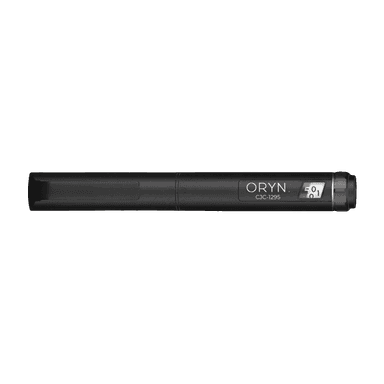
ORYN's CJC-1295 Pen (€129) delivers research-grade CJC-1295 in a precision pen format with >99% purity and a 30-day supply per pen.
Ipamorelin: The Selective GH Secretagogue
Ipamorelin is a pentapeptide ghrelin mimetic that selectively activates the GH secretagogue receptor (GHSR-1a) to stimulate GH release. It is considered the most selective GHSR agonist available for research.
Molecular Profile: - Pentapeptide: Aib-His-D-2-Nal-D-Phe-Lys-NH2 - Molecular weight: 711.85 g/mol - High selectivity for GHSR-1a with minimal off-target effects - Does not significantly affect cortisol, prolactin, or ACTH levels
Mechanism of Action: Ipamorelin binds GHSR-1a on pituitary somatotrophs, triggering GH release through a distinct intracellular pathway (IP3/DAG cascade) compared to CJC-1295's cAMP/PKA pathway. This complementary signalling is the basis for the synergistic stacking rationale.
Critically, ipamorelin does not stimulate appetite to the same degree as other ghrelin mimetics (GHRP-6, hexarelin) because it has minimal activity at the hypothalamic hunger centres.
Research Data: - Selective GH release without cortisol or prolactin elevation - Dose-dependent GH response (0.01-0.1 mg/kg range) - No tachyphylaxis (tolerance) reported in extended protocols - Well-characterised safety profile in clinical studies
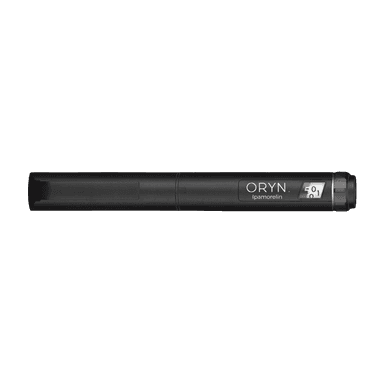
ORYN's Ipamorelin Pen (€129) provides a ready-to-use 30-day research supply.
The CJC-1295 + Ipamorelin Stack: Synergistic Mechanisms
The combination of CJC-1295 and ipamorelin represents one of the most well-established GH secretagogue stacks in peptide research. The synergy is grounded in complementary receptor pharmacology:
Why the stack works: 1. Dual receptor activation: CJC-1295 (GHRH receptor) + ipamorelin (GHSR-1a) engage two distinct signalling pathways on the same somatotroph cells 2. Amplified pulse magnitude: Combined administration produces GH pulses 3-5x greater than either compound alone 3. Preserved pulsatility: The stack maintains natural GH release patterns unlike exogenous GH 4. No cross-desensitisation: Each compound acts on a different receptor, so tolerance to one does not reduce the other's efficacy
Typical Research Stacking Protocol: - CJC-1295 (non-DAC): 100-300 mcg, 1-3 times daily - Ipamorelin: 100-300 mcg, 1-3 times daily - Administration: Both compounds injected together or sequentially - Timing: Morning and/or evening (30 minutes before meals) - Duration: 8-12 week research cycles
Observed Outcomes in Combined Research: - Elevated mean 24-hour GH levels - Significant IGF-1 increases (30-50% above baseline) - Improved body composition markers - Enhanced recovery markers in exercise research models
ORYN's Growth Hormone Stack bundles CJC-1295 + Ipamorelin at 15% off during the Peak Performance campaign (May 15 – June 30). Visit /peak-performance for details.
GH Secretagogues vs Exogenous Growth Hormone
A common question in GH research is whether secretagogues or direct GH administration is preferable:
Advantages of Secretagogues (CJC-1295 + Ipamorelin): - Maintain pulsatile GH release (physiological pattern) - Preserve hypothalamic-pituitary feedback loops - Do not suppress endogenous GH production - Lower risk of supraphysiological GH levels - Selective — do not elevate cortisol, prolactin, or aldosterone (ipamorelin) - Legal to purchase for research in most jurisdictions
Advantages of Exogenous GH: - Precise, predictable GH levels - Independent of pituitary function - Well-characterised pharmacokinetics - Established clinical dosing protocols
Key Distinction: Secretagogues are "amplifiers" — they increase what the pituitary already does. Exogenous GH is a "replacement" — it provides GH regardless of pituitary status. For research investigating physiological GH biology, secretagogues more closely model natural conditions.
Research Considerations and Monitoring
Researchers using CJC-1295 and ipamorelin should consider the following:
Monitoring Parameters: - GH levels (serial sampling to capture pulsatile release) - IGF-1 (reflects integrated GH exposure) - Body composition (DXA or BIA) - Fasting glucose and insulin (GH is a counter-regulatory hormone) - Subjective markers: sleep quality, recovery metrics
Common Observations: - Transient water retention during initial administration (resolves in 1-2 weeks) - Mild tingling or numbness in extremities (GH-mediated) - Increased appetite (more common with higher ipamorelin doses) - Improved sleep quality (GH is released primarily during deep sleep)
Storage Requirements: - Both compounds require refrigeration at 2-8°C - ORYN pens have 24-month shelf life when stored properly - Avoid freeze-thaw cycles and direct sunlight
All ORYN products are sold strictly for research purposes only.