A comprehensive overview of GLP-1 agonist research in 2026. Understanding the incretin pathway, comparing tirzepatide and semaglutide, and examining the expanding research landscape beyond metabolic disease.
11 min read · Updated 2026-04-10
The Incretin Pathway and GLP-1 Biology
Glucagon-like peptide-1 (GLP-1) is an incretin hormone secreted by L-cells in the small intestine in response to food intake. It plays a central role in glucose homeostasis and energy regulation, making GLP-1 receptor agonists one of the most important classes of compounds in modern metabolic research.
Physiological effects of GLP-1: - Stimulates glucose-dependent insulin secretion from pancreatic beta cells - Suppresses glucagon secretion in a glucose-dependent manner - Slows gastric emptying, prolonging nutrient absorption and promoting satiety - Acts on hypothalamic appetite centres to reduce food intake - May have direct effects on the cardiovascular system - Promotes beta cell survival and proliferation in preclinical models
The incretin effect: Oral glucose produces a greater insulin response than intravenous glucose at the same blood glucose level. This difference, the incretin effect, is primarily mediated by GLP-1 and GIP. In type 2 diabetes, the incretin effect is diminished, making incretin-based therapies particularly relevant.
Native GLP-1 limitations: Native GLP-1 has a half-life of only 2-3 minutes due to rapid degradation by dipeptidyl peptidase-4 (DPP-4). GLP-1 receptor agonists are engineered modifications with extended half-lives, enabling practical research and clinical use.
Semaglutide: The GLP-1 Receptor Agonist Standard
Semaglutide is a long-acting GLP-1 receptor agonist that has become the benchmark compound in incretin research. It was developed by modifying the native GLP-1 sequence to resist DPP-4 degradation and extend its half-life to approximately 7 days.
Structural modifications: - Amino acid substitution at position 8 (alanine to alpha-aminoisobutyric acid) for DPP-4 resistance - Attachment of a C18 fatty diacid via a linker to albumin-binding region - These modifications extend the half-life from 2-3 minutes to approximately one week
Clinical evidence for weight management: The STEP clinical trial programme evaluated semaglutide 2.4mg weekly for weight management: - STEP 1: approximately 15% mean weight reduction vs 2.4% placebo over 68 weeks - STEP 3: combined with intensive behavioural therapy, approximately 16% weight reduction - STEP 5: sustained efficacy over 2 years of continued treatment
Cardiovascular outcomes: The SELECT trial demonstrated a 20% reduction in major adverse cardiovascular events (MACE) in participants with overweight/obesity and established cardiovascular disease, independent of diabetes status. This was a landmark finding for the GLP-1 field.
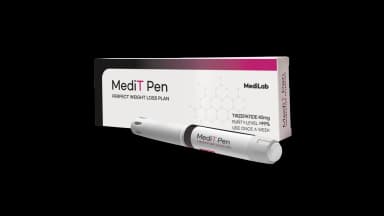
Available formats for research: Semaglutide is available through clinical channels. For incretin receptor research, ORYN offers tirzepatide pens as a research-grade dual GIP/GLP-1 agonist alternative.
FEATURED PRODUCT
Tirzepatide — Dual Incretin Research Peptide
20 mg · >99% purity · GMP
Tirzepatide: The Dual Agonist Approach
Tirzepatide represents the next evolution in incretin research as the first dual GIP/GLP-1 receptor agonist. By targeting both incretin receptors simultaneously, it has demonstrated superior efficacy compared to GLP-1-only agonists in head-to-head clinical trials.
Dual mechanism of action: - Activates both GIP receptors and GLP-1 receptors - GIP receptor activation enhances insulin secretion and may directly affect adipose tissue biology - GLP-1 receptor activation provides the established benefits of appetite suppression and glucose control - The combination appears to produce additive or synergistic metabolic effects
Clinical evidence (SURMOUNT programme): - SURMOUNT-1: approximately 22.5% mean weight reduction at the highest dose over 72 weeks - Over one-third of participants achieved 25% or greater weight loss - Superior to semaglutide in the SURPASS-2 head-to-head trial
Why tirzepatide is important for research: Tirzepatide validates the multi-target peptide approach. The demonstration that dual receptor activation produces superior outcomes compared to single receptor activation has broad implications for peptide design across therapeutic areas.
ORYN offers tirzepatide as pre-filled research pens and MediT format. >99% purity, GMP manufactured in South Korea. For research purposes only.
Beyond Metabolic Disease: Expanding Research
GLP-1 agonist research has expanded dramatically beyond glycaemic control and weight management. Several exciting research directions are emerging in 2026.
Cardiovascular disease: The SELECT trial (semaglutide) showed cardiovascular benefit independent of diabetes. Tirzepatide cardiovascular outcome trials are ongoing. GLP-1 receptors are expressed in cardiac tissue, suggesting direct cardioprotective mechanisms beyond weight reduction.
Non-alcoholic steatohepatitis (NASH/MASH): GLP-1 agonists have shown promise for reducing liver fat and improving liver histology. The SYNERGY-NASH trial is evaluating tirzepatide specifically for this indication.
Neurodegenerative disease: GLP-1 receptors are expressed in the brain, and preclinical research suggests potential neuroprotective effects. Studies are ongoing evaluating GLP-1 agonists in Alzheimer's and Parkinson's disease models.
Sleep apnoea: The SURMOUNT-OSA trial demonstrated that tirzepatide significantly reduced the apnoea-hypopnoea index in participants with obesity and obstructive sleep apnoea.
Heart failure: The SUMMIT trial showed tirzepatide improved symptoms and functional capacity in heart failure with preserved ejection fraction (HFpEF).
Addiction research: Emerging preclinical data suggests GLP-1 agonists may modulate reward pathways, with potential implications for substance use disorder research.
All ORYN products are for research purposes only.
Next-Generation Incretin Research Compounds
The success of tirzepatide's dual-agonist approach has catalysed development of even more ambitious multi-target compounds.
Triple agonists (GIP/GLP-1/Glucagon): Retatrutide is the most advanced triple agonist, activating GIP, GLP-1, and glucagon receptors simultaneously. Phase 2 data showed approximately 24% weight reduction at 48 weeks, exceeding even tirzepatide's results. Glucagon receptor activation adds thermogenic effects through increased energy expenditure.
Oral GLP-1 agonists: Oral semaglutide (Rybelsus) is already approved, but bioavailability is limited. Next-generation oral formulations with improved absorption are in development, potentially expanding accessibility for research and clinical applications.
Non-peptide GLP-1 agonists: Small molecule GLP-1 receptor agonists are in early development. These could overcome the limitations of peptide-based compounds (injection requirement, cold chain storage) while maintaining efficacy.
Implications for researchers: The GLP-1/incretin field is one of the fastest-moving areas in peptide science. Understanding the foundational biology of GLP-1 and GIP signalling is essential for interpreting new research and designing studies.
ORYN research products: ORYN offers tirzepatide pens for researchers studying dual incretin receptor biology. Pre-filled format with >99% purity, GMP certification, and COA documentation. EU shipping with 3-5 day delivery, next-day UK delivery. Free shipping over EUR175.
All products are for research purposes only.