An in-depth review of BPC-157 research related to gut health and gastrointestinal function. Examining the preclinical evidence for gastric cytoprotection, mucosal healing, and GI tract repair mechanisms.
10 min read · Updated 2026-04-10
BPC-157 and the Gastrointestinal System
BPC-157 (Body Protection Compound-157) holds a unique position in peptide research because of its origin: it is derived from a protein naturally found in human gastric juice. This gastric origin has made it a particularly compelling compound for studying gastrointestinal (GI) biology.
The peptide is a 15-amino acid fragment of the larger BPC protein, first isolated and characterised by researchers studying the protective mechanisms of the gastric mucosa. Unlike many synthetic peptides, BPC-157 has a direct biological connection to the GI system, which has driven extensive research into its effects on gut health.
Why BPC-157 is significant for GI research: - Derived from human gastric body protection protein - Stable in gastric juice (unusual for peptides) - Over 100 preclinical publications, many focused on GI models - Demonstrates activity when administered both systemically and orally in animal models - Multiple proposed mechanisms of action relevant to GI function
All data presented in this review comes from published preclinical studies. ORYN BPC-157 pens are sold exclusively for research purposes.
Gastric Cytoprotection Mechanisms
The cytoprotective properties of BPC-157 in the gastric mucosa have been studied extensively in animal models. Cytoprotection refers to the ability of a compound to protect cells from damage without directly neutralising the damaging agent.
Proposed mechanisms of gastric cytoprotection: - Nitric oxide (NO) system modulation: BPC-157 appears to interact with the NO system, which plays a crucial role in maintaining gastric mucosal integrity. Studies have shown it can counteract both NO-system blockade (L-NAME) and NO-system overstimulation (L-arginine) - Prostaglandin system interaction: The peptide may influence prostaglandin synthesis, which is essential for mucosal blood flow and bicarbonate secretion - VEGF upregulation: BPC-157 promotes angiogenesis through VEGF, supporting blood supply to the gastric mucosa - FAK-paxillin pathway: This cell signalling pathway, involved in cell adhesion and migration, appears to be activated by BPC-157
Preclinical evidence: Animal studies have demonstrated protective effects against ethanol-induced gastric lesions, NSAID-induced gastric damage, stress-induced ulceration, and various other models of gastric injury. The peptide has shown efficacy when administered before or after the insult.
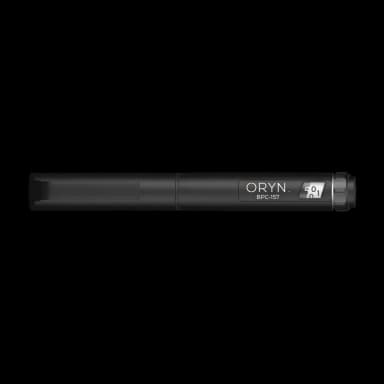
Available from ORYN as a pre-filled pen. >99% purity, GMP certified. For research only.
FEATURED PRODUCT
BPC-157 — Regeneration Research Peptide
10 mg · >99% purity · GMP
Mucosal Healing and Intestinal Repair Research
Beyond gastric protection, BPC-157 research extends to mucosal healing and repair throughout the gastrointestinal tract.
Inflammatory bowel disease (IBD) models: Preclinical studies have evaluated BPC-157 in various IBD models, including TNBS-induced colitis and DSS-induced colitis in rodents. These studies have reported improvements in mucosal integrity, reduced inflammation markers, and accelerated healing of colonic lesions.
Intestinal anastomosis research: Several animal studies have examined BPC-157 in the context of intestinal anastomosis healing (surgical reconnection of intestinal segments). Results suggest enhanced healing strength and improved collagen deposition at anastomotic sites.
Fistula models: Preclinical research has explored BPC-157 in gastrointestinal fistula models, with some studies reporting accelerated closure and improved tissue integrity.
Key observations: - BPC-157 appears to promote organised healing rather than merely accelerating it - Effects have been observed in both upper and lower GI tract models - The peptide maintains stability in acidic gastric conditions, which is unusual for peptides and relevant for oral administration research - Multiple routes of administration (systemic, oral, local) have shown activity in preclinical models
All findings are from preclinical animal studies. ORYN products are for research purposes only.
The NO System and GI Function
One of the most extensively studied aspects of BPC-157's mechanism is its interaction with the nitric oxide (NO) system, which is fundamental to GI function.
Role of NO in the GI tract: - Regulates gastric mucosal blood flow - Mediates smooth muscle relaxation (peristalsis) - Influences gastric acid secretion - Modulates mucosal defence mechanisms - Involved in inflammation resolution
BPC-157 and NO system interactions: Research has characterised BPC-157 as an NO system modulator rather than a simple stimulator or inhibitor. Key findings include: - Counteracts the effects of NOS inhibition (L-NAME administration) in animal models - Counteracts the effects of excessive NO (L-arginine overload) - Appears to restore NO system homeostasis rather than pushing it in one direction - This dual-directional modulation may explain its broad protective effects across different GI injury models
Implications for research: The NO-modulating properties of BPC-157 make it a valuable tool for researchers studying the role of nitric oxide in GI physiology and pathology. The ability to study a compound that normalises NO function, rather than simply increasing or decreasing it, provides unique experimental opportunities.
ORYN BPC-157 pens offer >99% purity for high-quality research. GMP certified, COA included. For research purposes only.
Research Considerations and Quality Requirements
Designing rigorous GI research protocols with BPC-157 requires attention to several practical considerations.
Purity and quality: GI research demands high-purity compounds to avoid confounding effects from impurities. ORYN BPC-157 pens provide >99% purity verified by HPLC, with mass spectrometry confirmation of molecular identity. Each batch includes a Certificate of Analysis (COA).
Dosing precision: Reproducible GI research requires consistent dosing. Pre-filled peptide pens deliver doses with less than 2% variance, significantly better than manual reconstitution from lyophilised powder, which typically has 10-15% variance.
Storage stability: Proper storage (2-8 degrees Celsius) is essential for maintaining peptide integrity. ORYN pens are designed for stability within this temperature range. Do not freeze.
Research-only use: BPC-157 is not approved as a medicine for GI conditions in any jurisdiction. All ORYN products are sold exclusively for research purposes. Researchers should not make or imply therapeutic claims based on preclinical data.
Ordering: ORYN ships BPC-157 pens from within the EU with 3-5 day delivery across Europe and next-day delivery in the UK. Free shipping on orders over EUR175 (GBP130). GMP manufactured in South Korea with >99% purity.