A detailed comparison of retatrutide delivery methods for research applications. Analysing dosing precision, contamination risks, convenience, cost efficiency, and storage requirements to determine whether pens or vials are superior for your research protocol.
8 min read · Updated 2026-04-10
Retatrutide: The Triple-Agonist Research Peptide
Retatrutide (LY3437943) is a novel triple-agonist peptide that has generated substantial interest in the metabolic research community. Unlike single- or dual-agonist peptides, retatrutide activates three distinct receptor pathways simultaneously: GLP-1 (glucagon-like peptide-1), GIP (glucose-dependent insulinotropic polypeptide), and glucagon receptors.
This triple-agonist mechanism differentiates retatrutide from compounds like semaglutide (GLP-1 only) and tirzepatide (GLP-1 + GIP dual-agonist). Preclinical and early clinical research has shown promising results in metabolic research models, with Phase 2 trial data published in the New England Journal of Medicine demonstrating notable effects on body weight parameters.
As research interest in retatrutide grows, the question of delivery method becomes increasingly important. Traditionally, research peptides have been supplied as lyophilised powder in vials requiring manual reconstitution. However, pre-filled pen systems are rapidly becoming the preferred format for serious research applications. This guide examines both formats in detail, comparing their suitability for retatrutide research protocols.
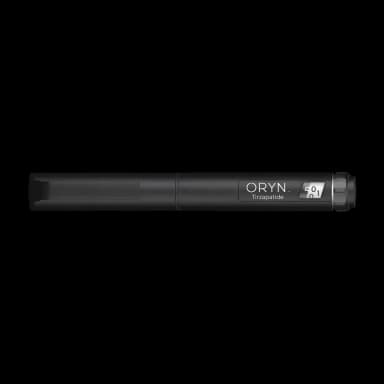
Note: Retatrutide is an investigational compound. It is not approved for any medical use. All discussion here relates to research applications only. ORYN currently offers tirzepatide (a related GLP-1/GIP dual-agonist) in both pen and Medit pen formats for research purposes.
Dosing Accuracy: The Critical Difference
Dosing precision is arguably the most important factor in peptide research, and it is the area where pen systems and vials differ most dramatically.
Vial Dosing Process: Using retatrutide from a vial requires a multi-step reconstitution and drawing process: 1. Calculate the correct volume of bacteriostatic water based on the desired concentration 2. Inject bacteriostatic water into the lyophilised peptide vial using a syringe 3. Gently swirl (never shake) until fully dissolved 4. Calculate the volume needed for each dose based on the reconstituted concentration 5. Draw the calculated volume into an insulin syringe 6. Administer the dose
Each step introduces potential error. Studies have documented dosing variance of 10-15% with manual vial preparation, driven by imprecise water measurement, inconsistent reconstitution, and difficulty reading insulin syringe markings (particularly at small volumes).
Pen Dosing Process: 1. Attach a sterile disposable needle 2. Dial the dose using the calibrated mechanism 3. Administer
Pre-filled pens deliver factory-calibrated doses with less than 2% variance. For research protocols spanning weeks or months, this consistency compounds into significantly more reliable data. When studying a triple-agonist like retatrutide — where dose-response relationships are complex across three receptor pathways — even small dosing inconsistencies can confound results.
For researchers using tirzepatide (the closest available dual-agonist), ORYN's pen format provides this precision advantage with every administration.
FEATURED PRODUCT
Tirzepatide — Dual Incretin Research Peptide
20 mg · >99% purity · GMP
Contamination and Stability Considerations
Peptide stability and sterility are paramount for valid research outcomes. Contamination can compromise both the compound and the research data, leading to irreproducible results or artefactual findings.
Vial Contamination Risks: - Each needle puncture of the vial's rubber stopper creates a potential entry point for bacteria and particulates - Over a 30-day protocol with daily dosing, the stopper is pierced 30+ times - Reconstituted peptide solutions are inherently less stable than sealed, pre-mixed formulations - Bacterial growth in bacteriostatic water (while inhibited by benzyl alcohol preservative) is not entirely eliminated - Rubber stopper coring can introduce particulate contamination into the solution - Each vial opening exposes the peptide to potential oxidation
Pen Stability Advantages: - Sealed cartridge system is never pierced until the moment of administration - Each administration uses a fresh, sterile disposable needle - Pre-mixed formulation is optimised at the factory for stability, pH, and preservative concentration - No reconstitution step eliminates the risk of incorrect dilution - Reduced air exposure minimises oxidative degradation
Specific Considerations for Retatrutide: As a larger, more complex triple-agonist peptide, retatrutide may be more susceptible to degradation from repeated freeze-thaw cycles, bacterial contamination, and oxidation compared to simpler peptides. The sealed pen format provides superior protection against all three degradation pathways.
ORYN's manufacturing process includes 0.22μm sterile filtration and gamma ray sterilisation — exceeding the quality standards of typical vial-based suppliers. This dual sterilisation approach ensures research-grade sterility from the factory to the final dose.
Convenience and Protocol Compliance
Research protocol compliance — the consistent execution of planned procedures — directly impacts data quality. The more complex the preparation process, the higher the likelihood of deviations, particularly in multi-week protocols.
Vial Preparation Kit: - Lyophilised peptide vial - Bacteriostatic water (separate vial) - Reconstitution syringes (1ml or 3ml) - Insulin syringes for dose drawing (multiple sizes may be needed) - Alcohol swabs for stopper cleaning - Sharps disposal container - Calculator for concentration and volume calculations - Written reconstitution protocol for reference
Estimated preparation time per dose: 5-10 minutes (longer for first-time users).
Pen Preparation Kit: - Pre-filled peptide pen - Disposable pen needles (one per use) - Alcohol swab
Estimated preparation time per dose: Under 1 minute.
The simplicity of pen-based dosing has a direct impact on protocol compliance. In multi-researcher studies, pen systems eliminate inter-researcher variability in preparation technique — a common source of confounding in peptide research. Each researcher delivers the same dose regardless of their experience with manual reconstitution.
Portability: Pen systems are significantly more portable than vial kits. A single pen replaces an entire reconstitution setup, making it practical for research settings where bench space is limited or where peptides need to be transported between locations. ORYN pens are compact, discreet, and require nothing beyond a pen needle to operate.
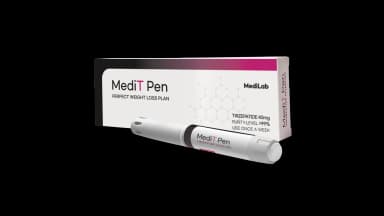
For researchers working with metabolic peptides like tirzepatide, ORYN offers both the standard Peptide Pen and the Medit Pen formats, each providing the convenience advantages described above.
Cost Analysis: Pen vs Vial
A comprehensive cost analysis must account for more than just the purchase price of the peptide itself. The total cost of research includes the compound, all consumables, waste generated by failed preparations, and the value of researcher time.
Vial Total Cost Breakdown: - Lyophilised peptide vial: Varies by supplier and quantity - Bacteriostatic water: €5-15 per vial - Reconstitution syringes: €0.50-1.00 each - Insulin syringes: €0.20-0.50 each (one per dose = 30+ per month) - Alcohol swabs: €0.05-0.10 each - Sharps container: €5-10 - Wastage from dosing errors: Estimated 5-10% of peptide volume over a protocol - Researcher time: 5-10 minutes per dose × 30 doses = 2.5-5 hours per month
Pen Total Cost Breakdown: - Pre-filled peptide pen: Single purchase price includes peptide and delivery mechanism - Disposable pen needles: €0.15-0.30 each - Alcohol swabs: €0.05-0.10 each - Wastage from dosing errors: Less than 1% due to precision mechanism - Researcher time: Under 1 minute per dose × 30 doses = under 30 minutes per month
Net Assessment: While the upfront price of a pre-filled pen may appear higher than a comparable vial, the total cost of ownership is often lower when accounting for consumables, wastage, and researcher time. For multi-month research protocols (8-16 weeks is typical for metabolic peptide studies), the cumulative savings become substantial.
Additionally, the reduction in wasted peptide — from both dosing errors and contamination-related discards — means more of the purchased compound goes toward generating useful data. For expensive triple-agonist peptides like retatrutide, minimising waste is a significant financial consideration.
ORYN's tirzepatide pens (the currently available dual-agonist option) offer competitive per-dose pricing when the total cost of ownership is calculated against vial alternatives.
Storage Requirements and Shelf Life
Proper storage is essential for maintaining peptide potency and ensuring consistent research results throughout a protocol. Storage requirements differ between vial and pen formats in important ways.
Vial Storage: - Lyophilised (unreconstituted) vials: Store at -20°C for long-term storage, or 2-8°C for short-term (weeks). Shelf life is typically 12-24 months when frozen - Reconstituted vials: Must be refrigerated at 2-8°C and used within 14-30 days depending on the compound and bacteriostatic water concentration - Once reconstituted, the clock is ticking — peptide degradation begins immediately and accelerates with each temperature excursion - Freeze-thaw cycles of reconstituted solution cause significant peptide degradation and should be avoided - If a vial is accidentally left at room temperature for an extended period, the entire reconstituted batch may be compromised
Pen Storage: - Store at 2-8°C (standard refrigerator temperature) - ORYN pens have a 24-month shelf life from manufacture when stored correctly - Factory-optimised formulation includes stabilisers that protect the peptide in solution - No reconstitution means no freeze-thaw risk - The sealed cartridge system protects against light and oxidation - If briefly exposed to room temperature (during transport or use), the sealed system returns to stable state upon refrigeration
Practical Storage Guidance: - Never freeze pre-filled pens - Keep in the original packaging until ready for use (protects from light) - Monitor refrigerator temperature regularly (log min/max) - Do not store peptides in a refrigerator door (temperature fluctuations from opening) - Place pens in the main compartment, away from the cooling element
The pen format's superior stability profile means researchers can purchase with confidence, knowing the compound will remain potent throughout even extended research protocols. For researchers considering multi-month metabolic peptide studies with tirzepatide or similar compounds, ORYN's pen format provides peace of mind on stability.
All ORYN products are sold for research purposes only. Visit orynxpeptides.com for full product specifications, pricing, and COA documentation.