Metabolic research using tirzepatide and semaglutide is the highest-profile peptide research domain in 2026. For researchers, the pen format is the difference between a replicable protocol and a very expensive pile of commercial autoinjectors.
12 min read · Updated 2026-04-14
Why metabolic research exploded in 2022–2026
Tirzepatide and semaglutide are GLP-1 (and in tirzepatide's case, dual GIP/GLP-1) receptor agonists that have driven the largest commercial and research interest in any peptide class since the introduction of biologics. The commercial side is dominated by Eli Lilly's Mounjaro/Zepbound (tirzepatide) and Novo Nordisk's Ozempic/Wegovy (semaglutide), which have generated multi-billion-dollar annual revenues and have reshaped the obesity and diabetes markets.
The research side has followed the commercial interest. Published literature on tirzepatide and semaglutide has grown roughly 10x from 2020 to 2026, covering everything from glycaemic control and body-composition endpoints to cardiovascular effects, neuroprotection, and inflammatory pathway modulation. The surge has created demand for research-grade supply of both compounds in a format that supports reproducible protocol work.
The problem for researchers has been that commercial tirzepatide and semaglutide ship as fixed-dose autoinjectors designed for patient self-administration. A single Mounjaro pen costs roughly €1000 retail and delivers one fixed dose of tirzepatide for four weeks. A research protocol that needs to run a dose-response curve across four exposure levels would need 4–8 different autoinjectors, each with its own single fixed dose — which is economically unfeasible and mechanically incompatible with dose-response research design.
Why ORYN's dial-a-dose tirzepatide pen is research-specific
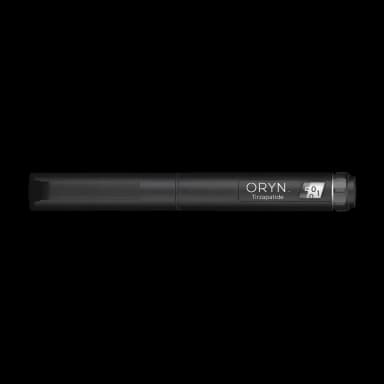
ORYN's tirzepatide peptide pen is designed for research use from the ground up. Unlike commercial autoinjectors, it's a reusable dial-a-dose format with a sealed cartridge that holds many research doses and a dial that lets the researcher set the administered amount independently per session. This immediately enables the two protocol patterns that commercial autoinjectors cannot support: dose-response curves and dose titration.
The pen uses the same mechanical geometry as commercial diabetic-care insulin pens (NovoPen, mylife Clickfine, Autopen) — the same sealed cartridge, the same replaceable needle, the same <2% click-accuracy guarantee that the insulin industry has used for decades. The cartridge is filled with tirzepatide under ORYN's GMP + ISO 7 cleanroom manufacturing rather than with insulin under a pharmaceutical company's QA. The CoA specifies the potency per batch, and every pen ships with a batch ID that's traceable to HPLC and mass-spec verification.
Pricing is the second key research-specific property. A single ORYN tirzepatide pen covers a 30-day research window at roughly €299 — compared to €1000+ for a commercial autoinjector covering the same period. For a 12-week research protocol, that's roughly €900 of ORYN pens vs €3000+ of commercial autoinjectors for the same exposure window, with vastly more flexibility in dose selection.
FEATURED PRODUCT
Tirzepatide — Dual Incretin Research Peptide
20 mg · >99% purity · GMP
The canonical 12-week metabolic research protocol
The most commonly referenced metabolic research protocol is a 12-week block with weekly administration, titrated across three 4-week phases: low dial (weeks 1–4), mid dial (weeks 5–8), upper dial (weeks 9–12). This mirrors the titration approach used in the SURPASS and SURMOUNT clinical research series and provides three distinct exposure levels per block for dose-response analysis.
Weekly administration is pharmacologically sufficient because tirzepatide has a ~5-day half-life that maintains stable exposure across the 7-day interval. The three-phase titration aligns with the published tolerability and endpoint data — lower exposure in weeks 1–4 establishes baseline tolerability, mid-range in weeks 5–8 gives the first dose-response comparison window, and upper-range in weeks 9–12 closes the dose-response curve. See the tirzepatide metabolic protocol template for the full scaffold.
The pen format makes this protocol tractable in ways that vial format and commercial autoinjector format both fail at. Vial format requires weekly reconstitution and draw variance across 12 sessions, which accumulates into a meaningful exposure-profile confound. Commercial autoinjector format locks you to a single dose per device, which means you'd need three different autoinjector SKUs to run the three phases (and even then you can't fine-tune the exact click counts).
Semaglutide and the GLP-1 single-agonist research track
Tirzepatide is a dual GIP/GLP-1 agonist; semaglutide is a single GLP-1 agonist. The research literature for both compounds has grown in parallel, and researchers frequently run comparative protocols that investigate single-pathway vs dual-pathway endpoint profiles.
For researchers comparing the two compounds, the pen format is the only practical approach because it standardises the delivery mechanism across both peptides. Running a comparative protocol with one peptide in commercial autoinjector format and the other in pen format would introduce a device-type confound that's hard to separate from the pharmacological comparison. Running both in pen format — same dial-accuracy, same reconstitution absence, same batch-locked CoA structure — isolates the pharmacological comparison from the device-variance confound.
Body-composition endpoints and protocol design
Body-composition research is the second most-studied metabolic endpoint category (after glycaemic control). The typical protocol runs 12–16 weeks and measures lean mass, fat mass, and body-weight trajectories across the research block. The endpoint sensitivity is high — meaningful body-composition changes are on the order of 5–15% from baseline over 12 weeks — which means the protocol needs the same kind of reproducibility discipline as recovery research.
The research-design implication is that pen format is strongly preferred for body-composition endpoints specifically because the endpoint sensitivity doesn't tolerate cumulative dose drift. A 10% exposure drift across a 12-week block would confound a 10% body-composition change — the two signals become indistinguishable. Pen format locks potency to the batch specification, which means the endpoint measurements reflect actual body-composition changes rather than drift-confounded pseudo-changes.
What the pen format buys you for metabolic research
Summarising across the protocol types: the pen format gives metabolic research three things that vial and commercial autoinjector formats don't.
Dose flexibility for titration and dose-response curves — the single most important property for any research protocol that needs more than one exposure level.
Reproducibility via <2% click variance and batch-locked potency, which is the binding constraint on endpoint sensitivity for longer protocol blocks.
Cost at roughly 30% of commercial autoinjector pricing, which makes 12-week protocols with three titration phases economically feasible rather than prohibitively expensive.
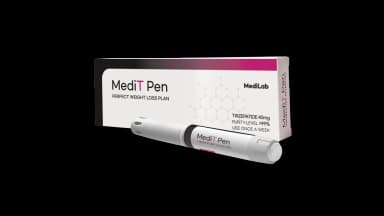
For researchers running tirzepatide or semaglutide protocols, these three properties are usually the difference between a replicable research program and a one-shot experiment that can't be extended or compared. ORYN's tirzepatide and medit-tirzepatide pens are both designed specifically for the research-use case and ship with the full CoA and batch documentation stack.