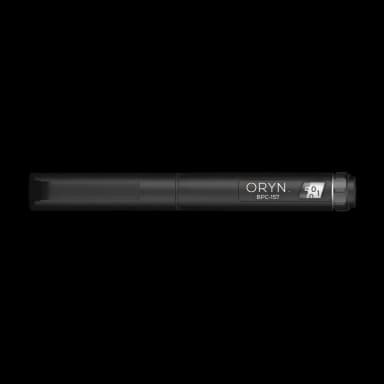
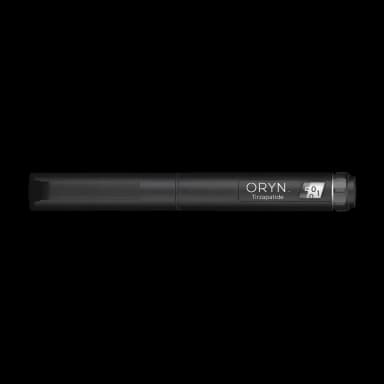
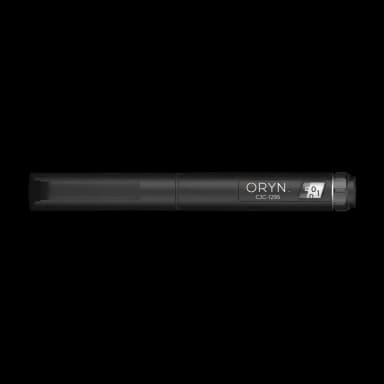
First-time research peptide pen buyers often come from vial format and don't know what to verify on arrival. This guide walks through the full process: picking a pen, verifying the CoA, receiving the shipment, and starting a protocol.
9 min read · Updated 2026-04-14
Who this guide is for
This guide is for researchers who are buying a research peptide pen for the first time — typically coming from vial format, from commercial autoinjectors, or from no prior peptide research experience at all. The goal is to cover the decisions and verifications that tend to surprise first-time buyers, in the order they'll come up in practice.
This is not a medical or clinical guide. ORYN sells all research peptides strictly for research use, and this document does not contain dosing recommendations for human administration. If you're looking for medical guidance, you should talk to a licensed physician and not use research-grade peptides.
Step 1 — Picking the right pen for your research question
The first decision is which peptide your research question actually needs. The seven most commonly researched peptide families are: recovery peptides (BPC-157, TB-500), GH-axis peptides (CJC-1295, ipamorelin), metabolic peptides (tirzepatide, semaglutide), longevity peptides (NAD+, glutathione), and skin/collagen peptides (GHK-Cu). Each family has its own literature, its own canonical protocol structures, and its own endpoint profiles.
If you know the research question but not the peptide, start by searching the published literature for the endpoint you're trying to measure, then working back from the papers to the peptide. This is the most reliable way to pick the peptide that matches your research. Buying a peptide based on general reputation or marketing is a common first-time mistake — the published literature is narrower than the marketing suggests, and protocols that work for one endpoint may not work for another.
If you already know the peptide but don't know which format, ORYN has pen-format pages for every product in the catalogue with pharmacology, protocol templates, and comparison pages for stacking decisions. The pen comparison pages (BPC-157 vs TB-500, CJC-1295 vs ipamorelin, NAD+ vs glutathione, tirzepatide vs semaglutide) are specifically designed to help you pick between two peptides in the same family.
FEATURED PRODUCT
BPC-157 — Regeneration Research Peptide
10 mg · >99% purity · GMP
Step 2 — Verifying the CoA before you order
Every ORYN research peptide pen ships with a Certificate of Analysis (CoA) that specifies the exact batch, the HPLC-verified purity, the mass-spec confirmed peptide identity, and the in-use stability window. For first-time buyers, the CoA is the single most important document — it's the thing that distinguishes research-grade supply from the grey-market vendors that have lower QA and higher variance.
What to check on the CoA:
Purity: ORYN pens specify >99% HPLC purity. Anything below 98% should be treated as lower quality. Grey-market suppliers frequently claim 98% but ship 85–95% material; reliable labs verify and specify the exact number.
Peptide identity confirmation: The CoA should show the mass-spec confirmation that the peptide is actually the one being sold. This catches contamination and mis-labelling, both of which are non-trivial risks in low-QA supply chains.
Batch ID: Every pen has a unique batch ID traceable to the manufacturing run. The batch ID should be on the CoA, on the pen packaging, and on the invoice. If any of these don't match, something is wrong.
Stability specification: The CoA should specify the stability profile of the peptide in pen format across the 30-day in-use window. ORYN pens specify the degradation rate and confirm the potency is within spec for the full in-use period.
You should be able to see the CoA for your specific batch when you receive the pen, and ORYN's customer support can confirm the CoA status before you order. If a supplier can't or won't provide the CoA, don't buy from them.
Step 3 — What to expect at delivery
Research peptide pens ship in insulated packaging with cold-chain tracking. You should see the pen in a sealed box with the CoA insert, the needle-set (usually 10 or 30 replaceable pen needles), and the research-use documentation. The pen itself should be refrigerated temperature on arrival — if the package is warm, contact ORYN customer support before using the pen.
Storage on arrival: the pen should go into refrigeration (2–8°C) immediately. Do not freeze a peptide pen — the freeze-thaw cycle can degrade the peptide and break the cartridge seal. Refrigerated storage is sufficient for the full 30-day in-use window.
Shelf life: the pen is stable for the period specified on the CoA before you start using it (the 'unopened' shelf life) and for 30 days after the first use (the 'in-use' window). The 30-day in-use window is the standard for pen-format research peptides and is validated by the manufacturing stability testing. Once you start a pen, track the first-use date and plan your protocol to fit inside the 30-day window.
Pen needles: the ORYN pen uses standard pen needles (usually 31G × 5mm, though exact spec depends on the pen model). The needle is replaceable and single-use — attach a fresh needle for every administration, never reuse. Pen needles are available from ORYN directly or from standard diabetic-care suppliers.
Step 4 — Learning to use the pen (it's faster than you think)
The first-time learning curve for a research peptide pen is roughly 15 minutes of orientation. The mechanical steps are simple: attach a fresh pen needle, prime the pen (dial 2 clicks, hold vertical, expel until a drop forms), dial the research administered amount, administer at the research site, replace the needle cap, remove and dispose of the needle safely.
The priming step is the most common first-time buyer question. Priming expels any air in the needle and confirms the pen is delivering peptide rather than a void space. You do this once at the start of every session — it takes 5 seconds and costs 2 clicks of peptide. Do not skip priming: if there's air in the needle, the first click of your research dose will deliver nothing, which is a dose-variance confound that ruins protocol reproducibility.
The dial-a-dose step is where the pen format shines vs vial format. You set the click count by turning the dial, and each click delivers a standardised unit of peptide with <2% variance. The click counts per research administered amount depend on the pen model — check the pen's technical specification for the exact click-to-amount mapping. See the peptide pen how-to-use page for the full walk-through with images.
Step 5 — Starting your first protocol
Once you have the pen, the CoA, and the orientation, the next step is your first protocol. First-time buyers typically fall into one of two patterns: they either run a conservative 'calibration' protocol to validate the pen's reproducibility and their own technique, or they dive straight into a replication of a published protocol that matches their research question.
Pattern 1 (calibration): Run a short 14-day block at a conservative dial setting, track the administered amounts carefully, and verify that the endpoint measurements are consistent with expected baseline biology. This catches any technique errors before they contaminate a longer protocol.
Pattern 2 (direct replication): Pick a published paper that matches your research question, follow the protocol structure exactly, and measure the endpoints the paper measures. This is higher-risk for a first-time user but produces data that's directly comparable to the published literature, which is valuable for replication research.
Either pattern works. ORYN's protocol template pages (BPC-157 recovery, tirzepatide metabolic, CJC-1295+ipamorelin GH stack, NAD+ longevity, GHK-Cu skin) are written specifically to scaffold this first-protocol decision.
Common first-time buyer mistakes to avoid
Mistake 1: Skipping the CoA. First-time buyers sometimes treat the CoA as paperwork and don't verify the batch purity and identity. This is the single most common cause of unreproducible protocols — you can't diagnose a protocol problem if you don't know whether the peptide is the specified peptide at the specified purity.
Mistake 2: Not priming the pen. Dose variance from un-primed pens is the second most common cause of protocol drift. Prime at the start of every session, no exceptions.
Mistake 3: Freezing the pen. Refrigerated, not frozen. Freeze-thaw cycles degrade most research peptides and can break the pen cartridge seal. Refrigerator only.
Mistake 4: Reusing pen needles. Pen needles are single-use. Reusing them contaminates the pen cartridge and introduces administration-site contamination. Attach a fresh needle every time.
Mistake 5: Running too short a protocol. Research peptide research is not 'take it and see what happens' — the endpoint profiles require specific protocol durations to register meaningful signals. Two weeks of BPC-157 is usually too short for tendon endpoints. Four weeks of tirzepatide is usually too short for body-composition endpoints. Check the published literature for the minimum duration for your target endpoint before designing the protocol.